
A Double Taxation Avoidance Agreement only actually helps you if the paperwork behind it is filed correctly. Knowing a treaty exists between India and another country is the easy part; claiming the benefit is where most people run into trouble.
Where India has a treaty with the country where you’re also being taxed, relief runs under Section 90 (or Section 90A for agreements with specified associations), and the treaty provisions apply wherever they’re more favourable than the Income Tax Act itself. Where no treaty exists, Section 91 provides unilateral relief instead, at the lower of the Indian rate or the foreign rate. India generally computes foreign tax credit using the Ordinary Credit Method: credit is capped at whichever is lower, the Indian tax attributable to that income or the actual tax paid abroad. Pay more tax overseas than India would have charged, and the excess simply isn’t creditable, it’s gone.
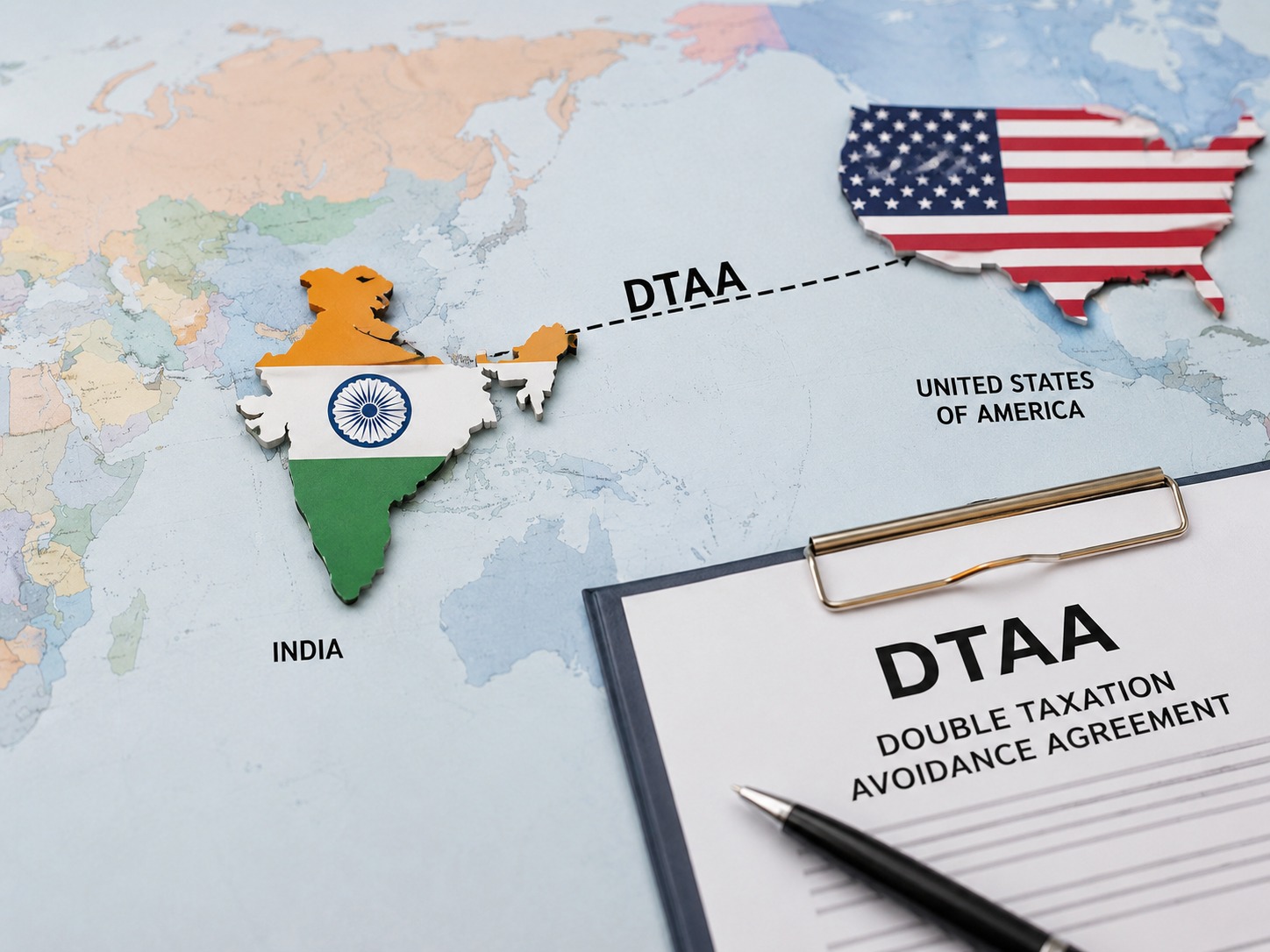
Claiming DTAA relief isn’t automatic just because a treaty exists. You need a Tax Residency Certificate (TRC) proving your residency in the other country, and if that certificate doesn’t already contain the specific details Indian tax rules require, name, status, nationality or country of incorporation, TIN, period of residency, address, you also file Form 10F electronically to supply what’s missing. Without both, a payer defaults to standard withholding rates rather than the reduced treaty rate, which on dividends, interest, or royalties can mean paying 20-30% instead of the 10-15% many treaties actually allow.
If you’re an Indian resident earning income in a treaty country and need to prove your Indian residency to that country’s tax authority, the process runs the other way: apply in Form 10FA to your jurisdictional Assessing Officer, which has to be filed physically rather than online, and the certificate comes back in Form 10FB. It’s valid for one financial year only, so it needs renewing annually for as long as you’re claiming the benefit.
Our Strength Lies in Providing Real World Practical Solutions
Our foremost priority is to provide instant support and ensure timely delivery so that you never miss important deadlines. We have successfully worked with highly time-sensitive clients and consistently achieved targets with precision and commitment.
We offer highly cost-effective services that create real value for your business without adding financial burden. Our focus is on long-term partnerships, transparent pricing, and delivering practical results with complete ownership.
Our experienced team of Chartered Accountants, Company Secretaries, Lawyers, and consultants provides complete financial and legal services under one roof, helping businesses save time, improve efficiency, and achieve seamless coordination.
With over 20+ years of leadership experience, we maintain the highest ethical standards and focus on building long-term client relationships through transparency, integrity, quality service, and dependable professional support.
A bilateral treaty ensuring the same income isn’t taxed twice across two countries. Relevant for NRIs, Indian residents with foreign income, expats in India, and cross-border businesses.
It allows either a tax exemption in one country or a reduced withholding rate on income types like dividends, royalties, or interest — significantly lowering overall tax outgo.
A TRC is issued by the taxpayer’s home country tax authority confirming residency. It is mandatory under Section 90 to claim DTAA benefits in India; without it, standard domestic TDS rates apply.
Yes. Foreign companies earning royalties, FTS, dividends, or capital gains from India can claim treaty relief, subject to qualifying as a tax resident of the treaty country.
Unilateral relief under Section 91 of the Income Tax Act is available, allowing a deduction for taxes paid abroad — though less favourable than treaty relief. Camantra evaluates the best approach.
How can help you