
Imagine buying a smartphone, booking a flight or paying for an online subscription without transferring money from your bank account. Instead, the payment is made using crypto currency stored in your digital wallet.
This is exactly what crypto cards make possible.
Crypto cards are becoming popular among crypto currency users because they allow digital assets such as Bitcoin and stablecoins to be converted into regular currency and used for everyday payments.
However, this payment method has attracted the attention of Indian regulators.
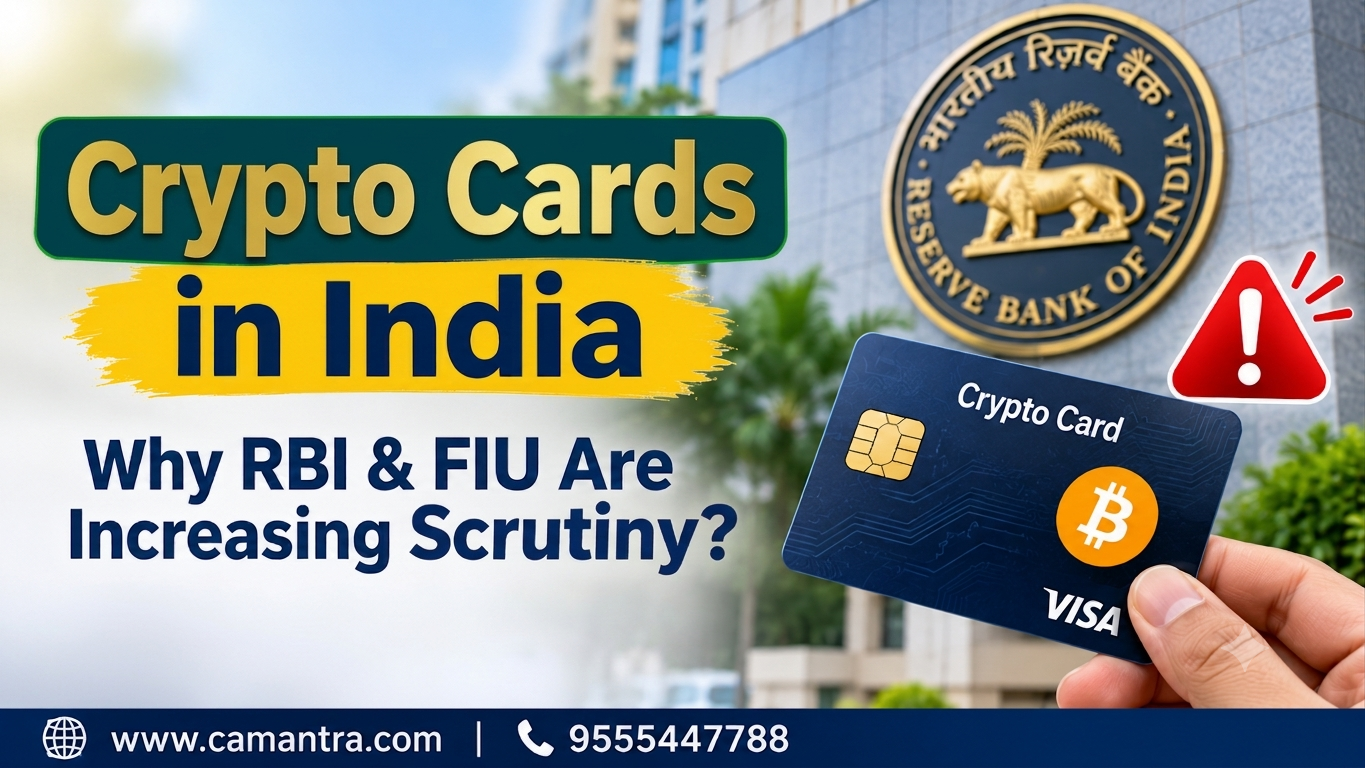
The Reserve Bank of India (RBI) and the Financial Intelligence Unit – India (FIU-IND) are reportedly examining overseas crypto card services that allow Indian residents to make domestic payments using crypto currency balances. Several users have also reported that their cards have stopped working.
The issue is not just about crypto currency. It also involves foreign exchange regulations, payment system rules and financial monitoring.
Let’s understand why crypto cards are under scrutiny in India and what users should know.
What Is a Crypto Card?
A crypto card is a payment card connected to a crypto currency wallet.
Unlike a normal debit card, which uses money available in your bank account, a crypto card uses your digital asset balance to fund payments.
For example:
- You hold USDT worth ₹1 lakh in a crypto wallet.
- You receive a crypto-backed prepaid card from an overseas service provider.
- You use the card to purchase goods worth ₹20,000.
- The service provider converts the required cryptocurrency into regular currency.
- The merchant receives payment through the card payment network.
For the merchant, the transaction may look like a normal card payment. However, the source of funds is different.
This difference is what makes crypto cards a subject of regulatory concern.
Why Are Crypto Cards Under RBI Scrutiny?
The RBI regulates India’s payment and banking systems. It also oversees various payment instruments and settlement arrangements.
Crypto cards issued by overseas fintech companies may operate through arrangements that are different from the regular Indian banking system.
Some of the major concerns include:
A. Payments Without a Traditional Bank Account
Crypto card users may be able to make payments directly from their digital asset wallets without maintaining the usual bank balance required for a debit card.
This can make it difficult for Indian financial institutions to understand the complete source of funds.
B. Overseas Wallets and Foreign Custodians
Many crypto card services are operated by overseas companies. The user’s crypto currency may be held with a foreign wallet provider or custodian.
This raises questions about the movement of funds between India and other countries.
C. Payment System Regulations
India has a regulatory framework for prepaid payment instruments and payment and settlement systems.
If an overseas crypto card arrangement is being used to facilitate payments in India, its structure may raise questions about compliance with the applicable RBI framework.
D. Limited KYC and AML Checks
Some overseas services advertise easy registration or limited KYC requirements.
This creates concerns about whether the identity of users, beneficial ownership of digital assets and source of funds are being properly verified.
Can Crypto Cards Violate FEMA Regulations?
One of the biggest concerns surrounding overseas crypto cards is the Foreign Exchange Management Act, 1999 (FEMA).
FEMA regulates foreign exchange transactions and cross-border payments involving Indian residents.
When an Indian resident uses a foreign crypto card, multiple transactions may take place behind the scenes:
- Cryptocurrency is deposited into an overseas wallet.
- The foreign service provider holds or manages the digital assets.
- Cryptocurrency is converted into foreign or local currency.
- The converted amount is used to settle the merchant’s payment.
Depending on the arrangement, these transactions may raise FEMA compliance questions.
For example, if an Indian resident uses an overseas crypto card to make payments to foreign merchants, the underlying foreign exchange transaction needs to be examined under the applicable rules.
Similarly, holding a wallet outside India does not automatically mean that all transactions through it are outside the scope of Indian regulations.
It is important to understand that FEMA compliance depends on the actual transaction structure, the parties involved and the nature of the payment. Every crypto card transaction should not automatically be labelled a FEMA violation.
Why Are Some Crypto Cards Being Deactivated?
Several users have recently reported that their overseas crypto cards are no longer working for payments in India.
Some have experienced failed online transactions, while others have reported restrictions on their card services.
The possible reasons include:
- Increased regulatory scrutiny.
- Compliance requirements of payment networks.
- Changes in card issuer policies.
- Restrictions imposed by overseas service providers.
- Concerns regarding the source of funds and transaction monitoring.
However, a failed card transaction does not automatically mean that the cardholder has committed a legal violation.
Users should contact their card providers to understand the exact reason for any restriction.
Can Crypto Cards Be Used for ATM Cash Withdrawals?
Some crypto card programmes also allow users to withdraw cash from ATMs.
In such cases, crypto currency held in the linked wallet may be converted into regular currency to fund the withdrawal.
This creates additional compliance questions because the transaction involves both digital assets and a traditional banking or payment network.
Authorities may examine:
- The source of the crypto currency.
- The identity of the cardholder.
- The overseas entity holding the wallet.
- The foreign exchange conversion process.
- The settlement mechanism used for the withdrawal.
Therefore, users should not assume that an ATM withdrawal funded through cryptocurrency is treated in exactly the same way as a normal domestic debit card withdrawal.
Conclusion
Crypto cards may offer an easy way to spend digital assets, but they also introduce complex regulatory questions.
The recent scrutiny by RBI and FIU-IND highlights that payment convenience cannot replace legal compliance.
For Indian residents, the important thing is to understand how the card works, where the funds are held and how the payments are settled.
Before using an overseas crypto card, it is advisable to review the FEMA, payment system and other applicable regulatory requirements.
Frequently Asked Questions (FAQs)
- What is a crypto card?
A crypto card is a payment card linked to a cryptocurrency wallet. It converts digital assets into regular currency to facilitate payments through a card network.
- Are crypto cards legal in India?
There is no blanket RBI authorisation for overseas crypto cards to operate as domestic payment instruments in India. Their regulatory position depends on the issuer, payment structure and applicable Indian laws.
- Why is RBI examining crypto cards?
RBI is reportedly examining concerns relating to overseas payment arrangements, foreign fund flows and possible non-compliance with Indian payment system regulations.
- What is the role of FIU-IND in crypto card transactions?
FIU-IND monitors financial transactions and works to identify suspicious financial activities. Its role includes enforcing applicable anti-money laundering reporting and compliance requirements for reporting entities.
- Can using an overseas crypto card create FEMA problems?
Yes, depending on the transaction structure. Foreign wallet arrangements, currency conversion and cross-border payments may raise FEMA compliance questions.
- Why are crypto cards getting blocked in India?
Some users have reported card deactivations. Possible reasons include regulatory scrutiny, issuer policies and payment network compliance requirements. The exact reason needs to be confirmed with the card provider.
- Can I withdraw cash using a crypto card?
Certain crypto card programmes support ATM withdrawals by converting cryptocurrency into regular currency. However, the availability of this facility does not establish regulatory compliance in India.
- Does using a Visa or Mastercard crypto card make it legal in India?
No. Acceptance on an international payment network does not automatically establish compliance with Indian laws and regulations.