The Truth About Digital Payments, Tax Visibility, and What Every Taxpayer Should Know
UPI has transformed the way India pays.
Today, people use UPI for almost everything:
- Buying groceries
- Paying rent
- Receiving freelance income
- Running small businesses
- Paying vendors
- Splitting restaurant bills
- Collecting customer payments
For many Indians, cash is no longer the preferred payment method.
And as digital payments continue to grow, one question keeps coming up:
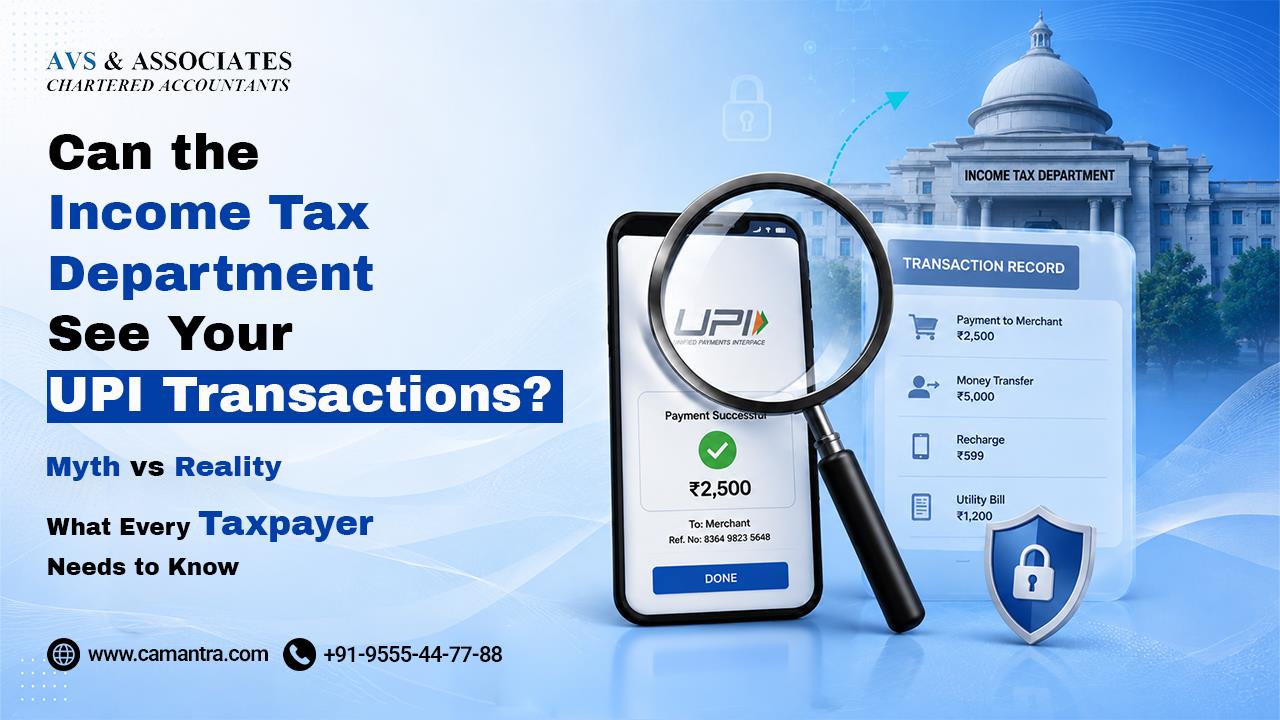
“Can the Income Tax Department see my UPI transactions?”
Some people believe:
- UPI payments are private.
- Small transactions go unnoticed.
- Personal accounts are invisible to tax authorities.
Others assume:
- Every UPI payment is automatically taxed.
- Every transaction is monitored individually.
The reality lies somewhere in between.
Let’s separate myths from facts.
The Short Answer: Digital Transactions Leave a Trail
Unlike cash transactions, UPI payments create a digital record.
Every transaction generally contains details such as:
- Sender information
- Recipient information
- Date and time
- Transaction value
- Bank account linkage
This doesn’t mean someone is manually reviewing every payment.
But it does mean the transaction exists within the digital financial ecosystem.
And digital records can be accessed through various reporting and compliance systems.
Many People Confuse Privacy With Invisibility
This is where misunderstandings begin.
People often think:
“My UPI account is private.”
That may be true from a general public perspective.
But private does not mean invisible to financial institutions or regulatory systems.
Banks maintain records.
Payment systems maintain records.
Financial transactions generate data.
The important point is:
Digital payments are traceable.
UPI Is Linked to Your Bank Account
One reason UPI has become so popular is its convenience.
But convenience comes with transparency.
Every UPI transaction ultimately connects to a bank account.
And bank accounts are already part of the formal financial system.
This means:
- Credits can be tracked
- Debits can be tracked
- Patterns can be analyzed
- Financial activity can be reviewed when necessary
The payment method may be UPI.
But the money still moves through regulated banking channels.
The Real Question Isn’t Visibility
Most taxpayers ask:
“Can the department see my UPI transactions?”
A better question is:
“Would my UPI transactions create a tax issue?”
And the answer depends on the nature of those transactions.
Not every payment creates a tax concern.
For example:
- Paying a friend back for dinner
- Sending money to family
- Splitting travel expenses
These types of personal transactions are very different from business income.
Context matters.
Business Income Received Through UPI Is Still Income
This is where many small business owners and freelancers make mistakes.
Imagine you:
- Run a small online store
- Offer consulting services
- Freelance on weekends
- Sell products through social media
Customers pay through UPI.
Some people assume:
“It’s only UPI, so it doesn’t count.”
But the payment method doesn’t determine taxability.
The nature of the income does.
If the money represents business or professional income, it may still need to be reported appropriately.
Small Businesses Are Becoming Increasingly Digital
A few years ago, many local businesses relied heavily on cash.
Today:
- Retail stores
- Restaurants
- Coaches
- Tutors
- Freelancers
- Content creators
Often receive a significant portion of their revenue through UPI.
As businesses become more digital, maintaining proper records becomes increasingly important.
Because the transaction history already exists.
Personal Account vs Business Account: A Common Mistake
Many individuals receive business payments into personal savings accounts.
Initially, it seems harmless.
After all:
“Money is money.”
But over time, this creates confusion.
Questions arise such as:
- Which payments were personal?
- Which payments were business-related?
- How much income was actually earned?
Separating personal and business finances often makes compliance much easier.
High Transaction Volume Can Raise Questions
One misconception is that only large profits attract attention.
In reality, transaction patterns can sometimes be more relevant than profits alone.
For example:
- Hundreds of incoming payments
- Large transaction volumes
- Frequent business-like activity
May create questions about the nature of the income involved.
This doesn’t automatically mean there is a problem.
It simply means documentation becomes important.
Freelancers and Creators Need to Pay Attention
Many freelancers today receive payments through:
- UPI
- Bank transfers
- Payment gateways
- International platforms
A common mistake is focusing only on the money that reaches the bank account.
And ignoring:
- Invoices
- Client records
- Income tracking
Good record-keeping matters because digital payments create a visible financial trail.
What About Gifts and Family Transfers?
Not every incoming UPI payment is taxable income.
For example:
- Personal gifts
- Family support
- Shared household expenses
- Reimbursements
May be treated differently from business receipts.
The challenge arises when taxpayers cannot explain the nature of transactions.
Documentation helps establish context.
Why Record-Keeping Matters More Than Ever
In the digital era, financial visibility is increasing.
This means taxpayers should focus less on:
“Can someone see this transaction?”
And more on:
“Can I explain this transaction if required?”
That’s a much better compliance mindset.
Good records may include:
- Invoices
- Contracts
- Payment confirmations
- Bank statements
- Business expense records
Common Mistakes People Make
Some of the most frequent errors include:
- ❌ Assuming UPI income is informal income
- ❌ Mixing personal and business transactions
- ❌ Not tracking customer payments
- ❌ Ignoring freelance income
- ❌ Failing to reconcile bank records
- ❌ Maintaining incomplete documentation
Most tax issues arise from poor record management rather than the payment method itself.
The Digital Economy Is Increasing Transparency
India’s financial system is becoming increasingly digitized.
Today, many activities generate electronic records:
- Banking transactions
- Investment activity
- Property purchases
- Online payments
- UPI transfers
This trend is likely to continue.
Which means compliance habits are becoming more important—not less.
A Practical UPI Compliance Checklist
Ask yourself:
- ✅ Can I identify business and personal transactions separately?
- ✅ Am I tracking income received through UPI?
- ✅ Are invoices maintained properly?
- ✅ Do my records match my bank activity?
- ✅ Can I explain large credits if required?
- ✅ Are my financial records organized throughout the year?
If the answer is “no” to several of these questions, it’s worth improving your record-keeping process.
The Bigger Lesson
The debate shouldn’t be:
“Can the Income Tax Department see my UPI transactions?”
The better question is:
“Am I maintaining proper records for my digital transactions?”
Because UPI itself isn’t the issue.
The issue is whether income is:
- Properly tracked
- Correctly reported
- Supported by documentation
Tax compliance is becoming increasingly data-driven.
And preparation is always easier than explanation after the fact.
Final Thought
UPI has made payments faster, easier, and more convenient than ever before.
But convenience should not be confused with invisibility.
Digital transactions create records.
And in today’s financial environment, transparency is becoming the norm.
The good news?
Most taxpayers have nothing to worry about if:
- ✔ Income is reported correctly
- ✔ Records are maintained properly
- ✔ Personal and business finances are separated
- ✔ Documentation is available when needed
The goal isn’t to avoid visibility.
The goal is to ensure your financial records accurately reflect reality.
Because in a digital economy, good documentation is one of the smartest financial habits you can build.
Let’s Discuss
Do you use UPI primarily for personal payments, business transactions, or both?
And do you keep separate records for business-related UPI receipts?
Share your experience—it may help others improve their financial organization.