
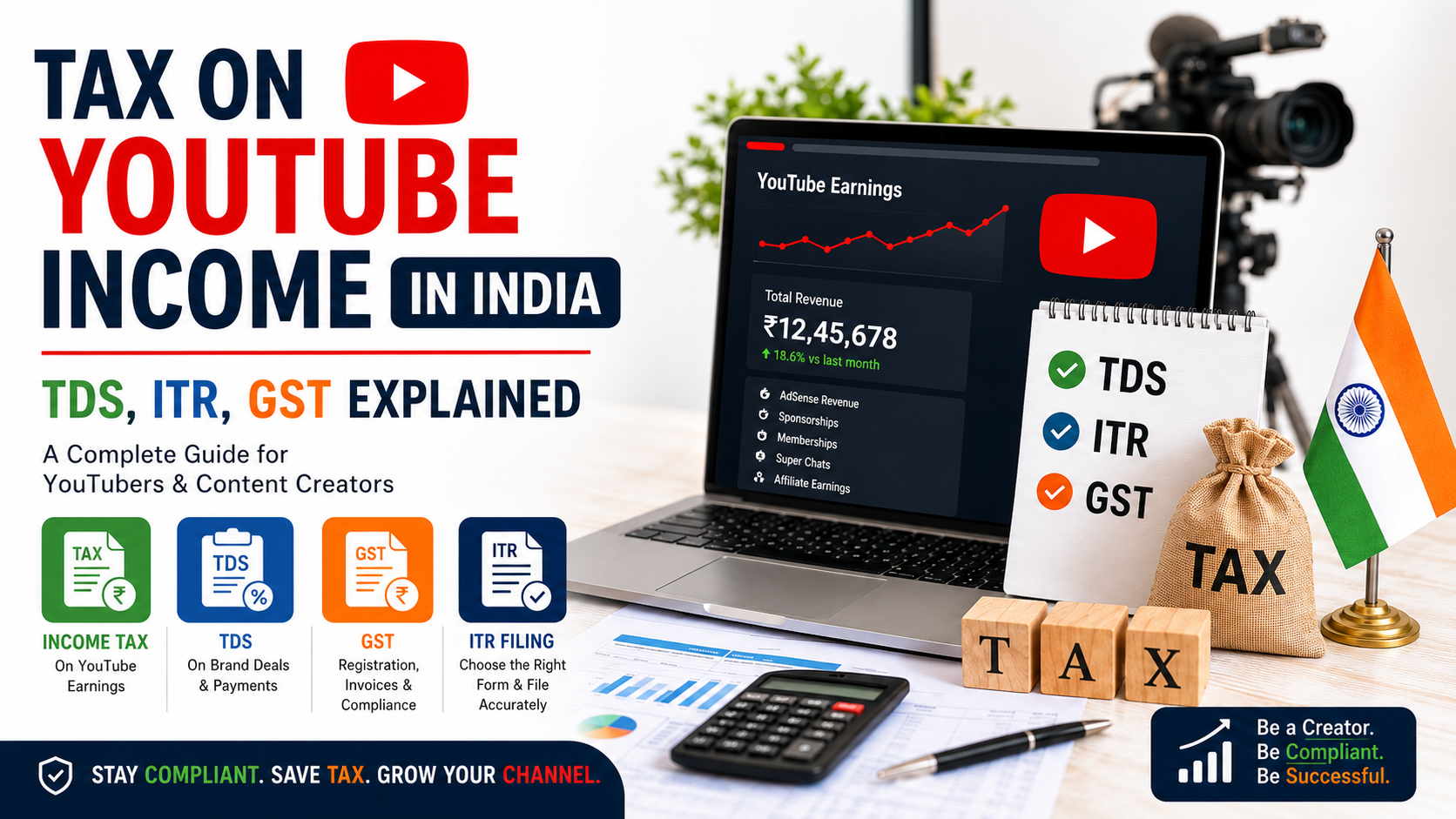
With thousands of creators earning money through YouTube ads, sponsorships, affiliate marketing, memberships and brand incorporations, taxation on creator income has become a significant topic in India. Most of the creators didn’t know that YouTube earnings are taxable and non-compliance can cause notices, fines and GST issues.
Understanding income tax, TDS, GST, and ITR filing is crucial for seamless financial management regardless of whether you are a full-time content creator or a part-time influencer. AVS & Associates assists digital creators and freelancers stay adhered to Indian tax regulations alongside managing their online earnings effectively.
Understanding youtuber tax India
Any money earned from YouTube is considered taxable income under Indian tax laws. The income may be categorized under:
- Business or professional income
- Income from other sources (in limited cases)
Most professional YouTubers are treated as self-employed professionals because they earn regularly through content creation.
Common Sources of YouTube Income
A creator may earn through:
- Google AdSense revenue
- Sponsored videos
- Affiliate marketing commissions
- Merchandise sales
- Super Chats and memberships
- Brand endorsements
- Course sales and digital products
All these earnings are taxable and should be disclosed properly while filing returns.
Is YouTube Income Taxable in India?
Yes, YouTube income is fully taxable in India regardless of whether the earnings come from local viewers or global audiences.
The applicable tax depends on:
- Total annual income
- Nature of earnings
- Business expenses claimed
- GST applicability
- Residential status
In case your overall income exceeds the standard exemption limit, you must file an Income Tax Return (ITR).
How to Calculate tax on youtube income
Tax is calculated on your net profit, not total revenue.
Formula
Net Taxable Income = Total Earnings – Business Expenses
Deductible Expenses for YouTubers
YouTubers can legally claim several business-related expenses, such as:
- Camera and recording equipment
- Laptop and editing software
- Internet bills
- Travel expenses for shoots
- Studio rent
- Marketing and advertising expenses
- Freelancer payments
- Electricity expenses
- Mobile bills used for business
Maintaining invoices and payment records is very crucial to support these deductions.
Which ITR Form Should YouTubers File?
The ITR form depends on the type and scale of earnings.
Commonly Applicable ITR Forms
ITR-3
Appropriate for:
- Content creators with business income
- Professional YouTubers
- Individuals maintaining books of accounts
ITR-4 (Presumptive Taxation)
Appropriate for:
- Professionals with income within prescribed limits
- Small creators opting for presumptive taxation under Section 44ADA
Under presumptive taxation:
- 50% of total receipts are treated as profit
- Detailed expense tracking may not be required
- Compliance becomes easier
However, choosing the right ITR form depends on your income structure and deductions.
What is tds on youtube income
TDS refers to Tax Deducted at Source. Certain payments made to YouTubers may attract TDS before payment is credited.
TDS on Google AdSense Income
Google usually does not deduct Indian TDS on AdSense payments because payments often come from foreign entities. However:
- Income is still taxable in India
- You must report the full income while filing ITR
TDS on Brand Collaborations
Indian companies paying creators for promotions or sponsorships may deduct TDS under:
- Section 194J – professional services
- Section 194C – contractual payments in some cases
The TDS rate generally ranges between:
- 2%
- 10%
depending on the nature of the transaction.
Important Points
- Always collect Form 16A from brands
- Verify TDS credit in Form 26AS
- Match income details before filing ITR
Incorrect reporting can result in tax notices.
GST Applicability for YouTubers
Many creators assume GST does not apply to digital income, which is incorrect.
When GST Registration Becomes Mandatory
GST registration is generally needed if:
- Annual turnover exceeds prescribed threshold limits
- Services are supplied across states
- Foreign clients or platforms are involved
Content creators often provide online information and advertising services, which may attract GST compliance requirements.
Understanding gst on youtube earnings
GST implications vary depending on the source of income.
GST on AdSense Revenue
AdSense income received from Google abroad may qualify as export of services if conditions are satisfied.
In many cases:
- Export of services may be treated as zero-rated supply
- GST payment may not be required after LUT filing
- Proper documentation is still mandatory
GST on Indian Brand Deals
If Indian companies pay you for promotions:
- GST may apply on invoices
- Standard GST rates may become applicable
- You may need to issue GST-compliant invoices
Important GST Documents
Creators should maintain:
- GST registration certificate
- LUT filing documents
- Invoices
- Foreign remittance proofs
- Bank statements
Proper compliance helps avoid departmental scrutiny.
What is AdSense tax India
Even if the payment comes from another country google AdSense earnings are taxable in India.
Main Tax Considerations
- AdSense revenue must be included in ITR
- Foreign inward remittance records should be preserved
- Bank conversion charges can be claimed as expenses
- GST export provisions may apply
Documents to Maintain
Keep the following safely:
- AdSense earning statements
- Form 26AS
- FIRC or bank advice
- Sponsorship contracts
- Expense bills
These records help during tax evaluations and GST filings.
Can YouTubers Receive Tax Notices?
Yes, creators may receive notices for:
- Non-filing of ITR
- Mismatch in TDS details
- High-value foreign remittances
- Unreported sponsorship income
- GST non-compliance
Income tax departments now actively track digital income through banking channels and online transactions.
Tips to Save Tax Legally
YouTubers can reduce tax liability legally through proper planning.
Useful Tax Saving Strategies
- Claim all genuine business expenses
- Use depreciation benefits on equipment
- Opt for presumptive taxation if beneficial
- Maintain separate business accounts
- Maintain proper invoices and contracts
- File returns before due dates
Expert tax planning can greatly decrease compliance problems.
Common Mistakes Made by YouTubers
Most of the creators unintentionally make mistakes that later develop problems.
Frequent Mistakes Include
- Ignoring GST registration
- Not reporting foreign income
- Using incorrect ITR forms
- Forgetting TDS reconciliation
- Not maintaining expense proofs
- Blending personal and business transactions
Prevention of these errors assists in ensuring smoother tax compliance.
Why Professional Assistance Matters
Digital creator taxation involves multiple laws including:
- Income tax
- GST
- International remittances
- TDS reconciliation
- Advance tax obligations
Expert advice assists creators pay attention to content while ensuring compliance with varying tax regulations.
Conclusion
Understanding about income tax filing, TDS deductions and correct GST obligations is crucial for creators as in India youtube earnings are also subject to taxation. Any income earned from AdSense, sponsorships or otherwise, should be precisely reported to prevent possible penalties or notices. For long-term financial stability keeping invoices, filing right ITR forms and understanding GST rules for exports and brand collaborations are crucial. AVS & Associates provide YouTubers, influencers and digital creators with end-to-end tax planning, GST compliance, ITR filing and financial advisory services to help manage their digital income effectively.