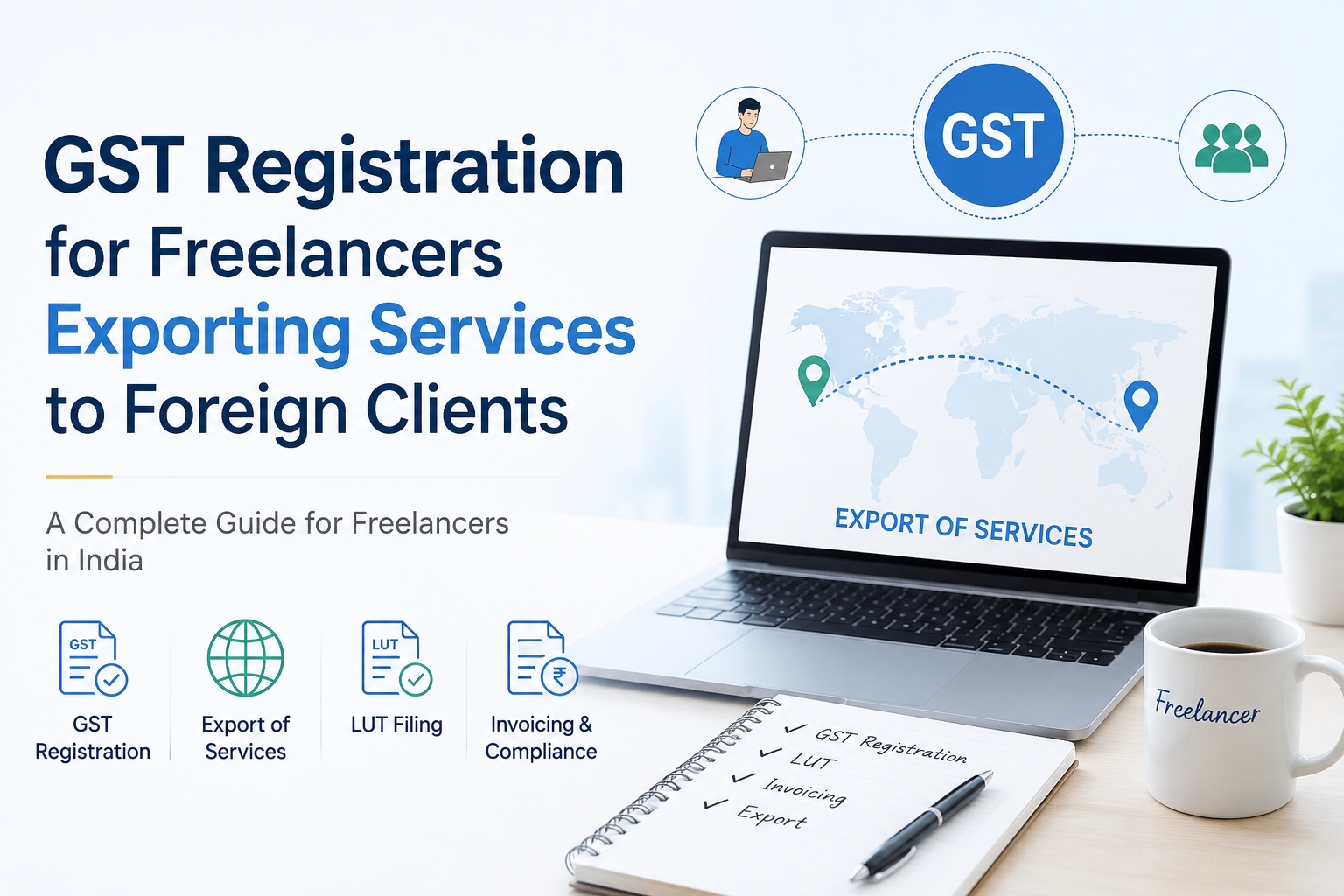
Freelancing has opened worldwide earning opportunities for Indian experts. Now-a-days, graphic designers, digital marketers, software developers, consultants, writers and video editors work continuously with overseas customers. Nevertheless, when international payments start coming in, taxation and compliance become equally significant. Knowing about GST for freelancer export India assists freelancers stay legally compliant besides enjoying tax advantages available on exported services.
To most of the freelancers, GST rules might seem confusing at the beginning. Queries related to invoicing, export documentation, foreign remittances and GST registration are common. This guide by AVS & Associates explains everything freelancers need to know about GST on export services in a simple and practical manner.
Understanding GST on Exported Freelance Services
Under Indian GST law, services provided to foreign customers are generally treated as exports if certain criterias are fulfilled. Export of services receives special treatment under GST because the government promotes foreign income inflow into the country.
A service qualifies as export when:
- The supplier of service is located in India
- he client is located outside India
- Payment is received in convertible foreign currency
- The supplier and recipient are not merely establishments of the same entity
- The place of supply is outside India
When these conditions are satisfied, the transaction is treated as GST on export of services and can qualify for GST benefits.
Why Freelancers Should Consider GST Registration
Many freelancers believe GST registration is unnecessary if they work independently. However, export-related transactions often make registration beneficial and, in some cases, mandatory.
Here are some major reasons why GST registration for freelancers becomes important:
1. Export Benefits Under GST
Registered freelancers can export services without charging GST by filing an LUT. This prevents unnecessary tax blockage and improves cash flow.
2. Professional Credibility
International clients often prefer working with properly registered professionals who issue formal invoices and maintain legal compliance.
3. Input Tax Credit Benefits
To freelancers, GST registration provides an advantage of claiming Input Tax Credit (ITC) on eligible business expenses such as:
- Laptop purchases
- Software subscriptions
- Office rent
- Internet bills
- Professional tools
4. Mandatory Registration in Certain Cases
Although service providers generally receive exemption up to a threshold limit, export-related transactions may still require compliance depending on the structure and nature of operations.
Is GST Mandatory for Freelancers in India?
The applicability of GST relies on turnover, business type and whether services are exported or supplied domestically.
Under current GST provisions:
- Service providers crossing the prescribed turnover threshold may need registration
- Exporters often voluntarily register to claim export-related benefits
- Businesses working through online marketplaces may have additional compliance requirements
Understanding gst for freelancers India assists in preventing future warning letters, fines and compliance sophistications.
What is a Zero-Rated Supply Under GST?
Under GST rule exports are treated as zero-rated supply. This is one of the most beneficial provisions for freelancers serving foreign clients.
A zero-rated supply means:
- GST rate effectively becomes zero
- Exporter can claim refund of input taxes
- Services can be exported without charging GST under LUT
This system guarantees Indian exporters remain competitive internationally without extra tax burden.
What is LUT and Why is it Significant?
One of the most important compliance tools for freelancers exporting services is the LUT (Letter of Undertaking).
An LUT allows exporters to provide services internationally without paying GST upfront.
Without LUT:
- Freelancers may need to charge IGST on export invoices
- Refund claims become more time-consuming
- Working capital may get blocked
Benefits of Filing LUT
- Export services without charging GST
- Faster compliance management
- Better cash flow
- Reduced refund dependency
LUT filing is usually completed online through the GST portal and remains valid for one financial year.
Documents Required for GST Registration
Freelancers generally need the following documents while applying for GST registration:
- PAN card
- Aadhaar card
- Passport-size photograph
- Address proof
- Bank account details
- Business proof, if applicable
The registration process is primarily online and can often be completed quickly with proper documentation.
Importance of FIRC for Export Payments
When freelancers receive payments from foreign clients, banks issue a Foreign Inward Remittance Certificate known as FIRC.
This document acts as proof that:
- Payment was received from outside India
- Foreign currency entered the country legally
- Export proceeds were realized properly
FIRC becomes extremely important during:
- GST assessments
- Refund claims
- Export verification
- Income tax scrutiny
Freelancers should safely maintain all FIRC records along with invoices and contracts.
GST Invoice Requirements for Freelancers
An export invoice is required to have correct information for staying compliant with the GST rules.
A professional export invoice should include:
- Freelancer’s GSTIN
- Invoice number and date
- Client details
- Currency used
- Description of services
- Value of services
- LUT declaration, if applicable
Many freelancers also mention:
- Payment terms
- Bank details
- Country of client
- Project reference number
Maintaining proper invoices helps during audits and submission of tax.
Common Mistakes Freelancers Should Prevent
Without proper knowledge, freelancers working with overseas clients often make compliance errors.
Ignoring GST Registration
Many professionals assume foreign income is automatically tax-free. Export benefits apply only when proper compliance is followed.
Not Filing LUT
Failure to file LUT may complicate export transactions and refund processes.
Improper Documentation
Missing agreements, invoices, or bank records can create issues during tax verification.
Mixing Personal and Business Transactions
Using personal accounts for freelance income without proper accounting creates confusion during tax filings.
Delayed GST Returns
Even if no GST is payable, registered persons may still need to file GST returns regularly.
Can Freelancers Claim Refunds Under GST?
Yes, registered freelancers exporting services can claim refunds of unutilized Input Tax Credit.
This may include GST paid on:
- Office expenses
- Business software
- Professional subscriptions
- Equipment purchases
However, refund processing requires:
- Proper invoices
- GST return filing
- Export documentation
- Foreign remittance proof
Professional accounting assistance often simplifies the process considerably.
Best Practices for Freelancers Exporting Services
Freelancers handling international clients should adopt structured compliance practices from the beginning.
Maintain Organized Records
Keep digital copies of:
- Contracts
- Invoices
- Payment receipts
- Bank statements
- LUT filings
- GST returns
Utilization of Proper Accounting Software
Accounting tools help track invoices, taxes, payments and adherence schedules effectively.
Separate Business Banking
Using a dedicated bank account for freelance income improves financial clarity.
Consult Tax Professionals
GST rules change rapidly. Expert advice helps freelancers prevent unwanted fines and refine compliance.
How AVS & Associates Can Help Freelancers
Managing GST compliance while handling client projects can become overwhelming for freelancers. AVS & Associates assists professionals with:
- GST registration
- LUT filing
- GST return filing
- Export documentation
- Refund assistance
- Income tax compliance
- Advisory for international transactions
Expert assistance guarantees that freelancers can put emphasis to customer work without worrying about regulatory complications.
Conclusion
With proper adherence, freelancers who export services from India can benefit greatly from the provisions of the Goods and Services Tax. The knowledge of GST registration, LUT filing, zero-rated export regulations, invoicing requirements and FIRC documentation helps prevent legal hassles alongside increasing financial benefits. By implementing the right strategies and expert guidance from AVS & Associates, freelancers can grow their client base on an international level and remain perfectly compliant with the tax laws of India.