
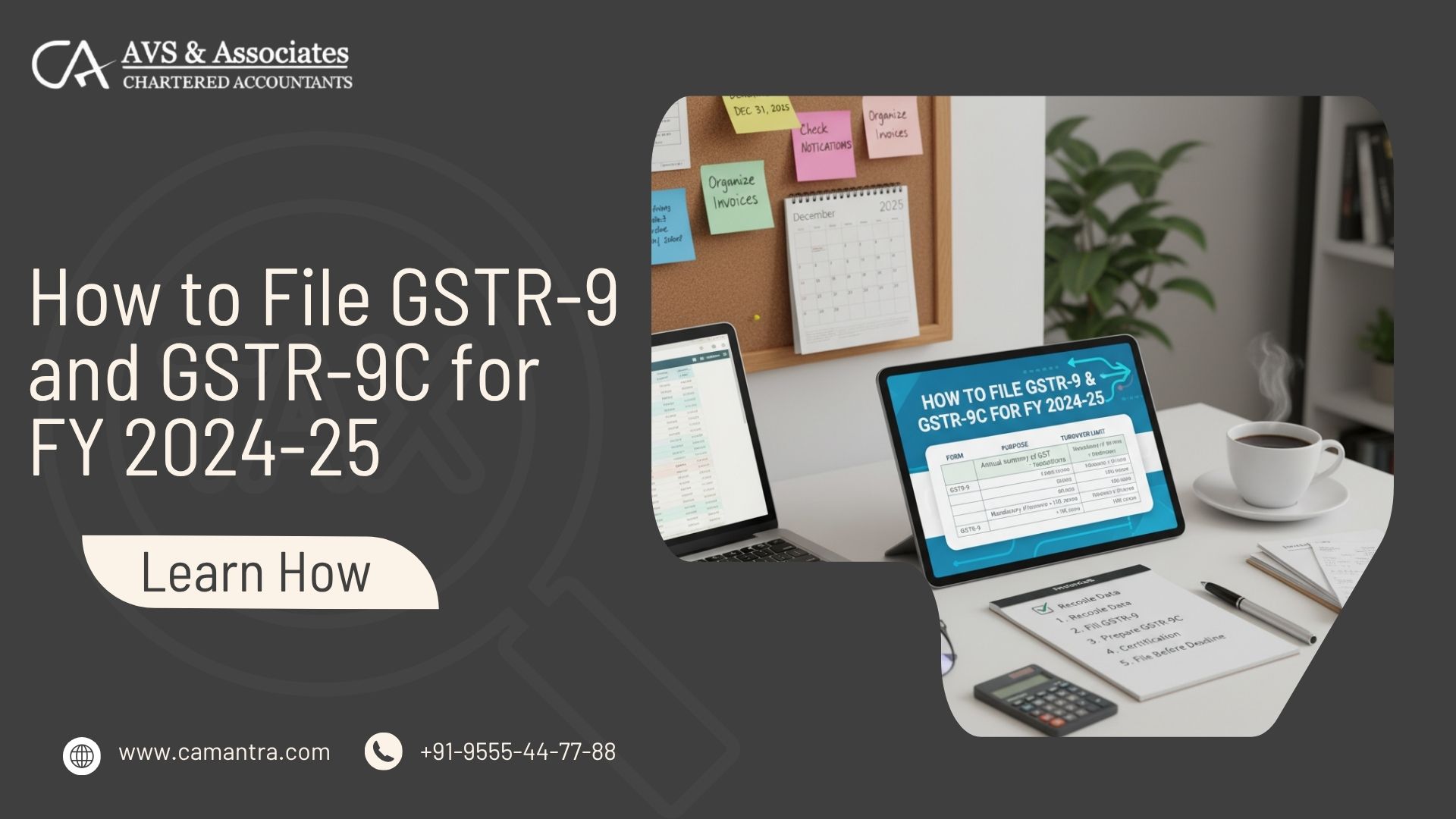
If you’re a business owner or accountant getting ready for GST annual compliance, two forms will top your checklist GSTR-9 and GSTR-9C. These filings summarize your entire year of GST transactions and help ensure your records match what’s reported to the government.
Here’s a practical, step-by-step guide to make the process easier.
What Are GSTR-9 and GSTR-9C?
| Form | Purpose | Who Needs to File | Turnover Limit |
| GSTR-9 | Annual summary of GST transactions -sales, purchases, ITC, and taxes paid. | All regular taxpayers. | Mandatory if turnover > INR 2 crore; optional below INR 2 crore. |
| GSTR-9C | Reconciliation between GSTR-9 and audited financial statements – like a GST self-audit. | Businesses undergoing GST audit. | Mandatory if turnover > INR 5 crore. |

Important Dates & Notifications
For FY 2024-25, both GSTR-9 and GSTR-9C must be filed by December 31, 2025. Recent updates include Notification No. 13/2025-CT (Sept 22, 2025), which introduced new reporting formats, and Notification No. 15/2025-CT (Sept 17, 2025), which provides exemption for small taxpayers with turnover up to INR 2 crore. Additionally, Circular 246/03/2025-GST clarifies late-fee rules and reporting requirements for e-commerce supplies. Staying aware of these updates will help avoid penalties and ensure accurate filing.
How to Tackle GSTR-9 Step by Step
Filing GSTR-9 might seem intimidating at first, but breaking it down into simple steps makes it much easier. By tackling it systematically, you can ensure accuracy, avoid errors, and save time. Here’s a straightforward approach to get it done efficiently:
1. Reconcile Data Early
Match your GSTR-1, GSTR-3B, and GSTR-2B with your sales and purchase ledgers. Fix mismatches in outward supplies or ITC before filing.
2. Fill Out GSTR-9
| Table | What It Covers |
| Tables 4–5 | Outward supplies and amendments. |
| Tables 6–8 | ITC claimed, reversed, or ineligible. |
| Tables 9–14 | Taxes paid, refunds, and demands. |
| Tables 15–19 | HSN-wise details and additional information. |
3. Prepare GSTR-9C (if applicable)
Collect audited financials, trial balances, and ledgers. Reconcile turnover, ITC, and taxes paid.
4. Certification
GSTR-9C must be digitally signed by you or a Chartered Accountant. File both forms using the GST portal, either via offline utility or JSON upload.
5. File Before Deadline
The due date is December 31, 2025. Late filing attracts daily fees, so file early to stay penalty-free.
Tips to Make Filing Less Stressful
Filing GSTR-9 and GSTR-9C doesn’t have to be overwhelming. A little preparation and organization can go a long way in avoiding last-minute rush, errors, or penalties. Here are some practical tips to make the process smoother:
- Keep invoices and supporting documents organized.
- Use accounting software or ERP systems to reduce errors.
- Review reconciliations before submission.
- Remember: turnover is checked at the PAN level, but each GSTIN files separately.
Why Filing GSTR-9 and GSTR-9C Matters
Filing GSTR-9 and GSTR-9C isn’t just about compliance it’s a financial checkup for your business. Start reconciling data early, stay updated with GST notifications, and use the right tools to make filing smooth and stress-free.
With proper preparation, you can close FY 2024-25 confidently and maintain a clean, accurate GST record.