
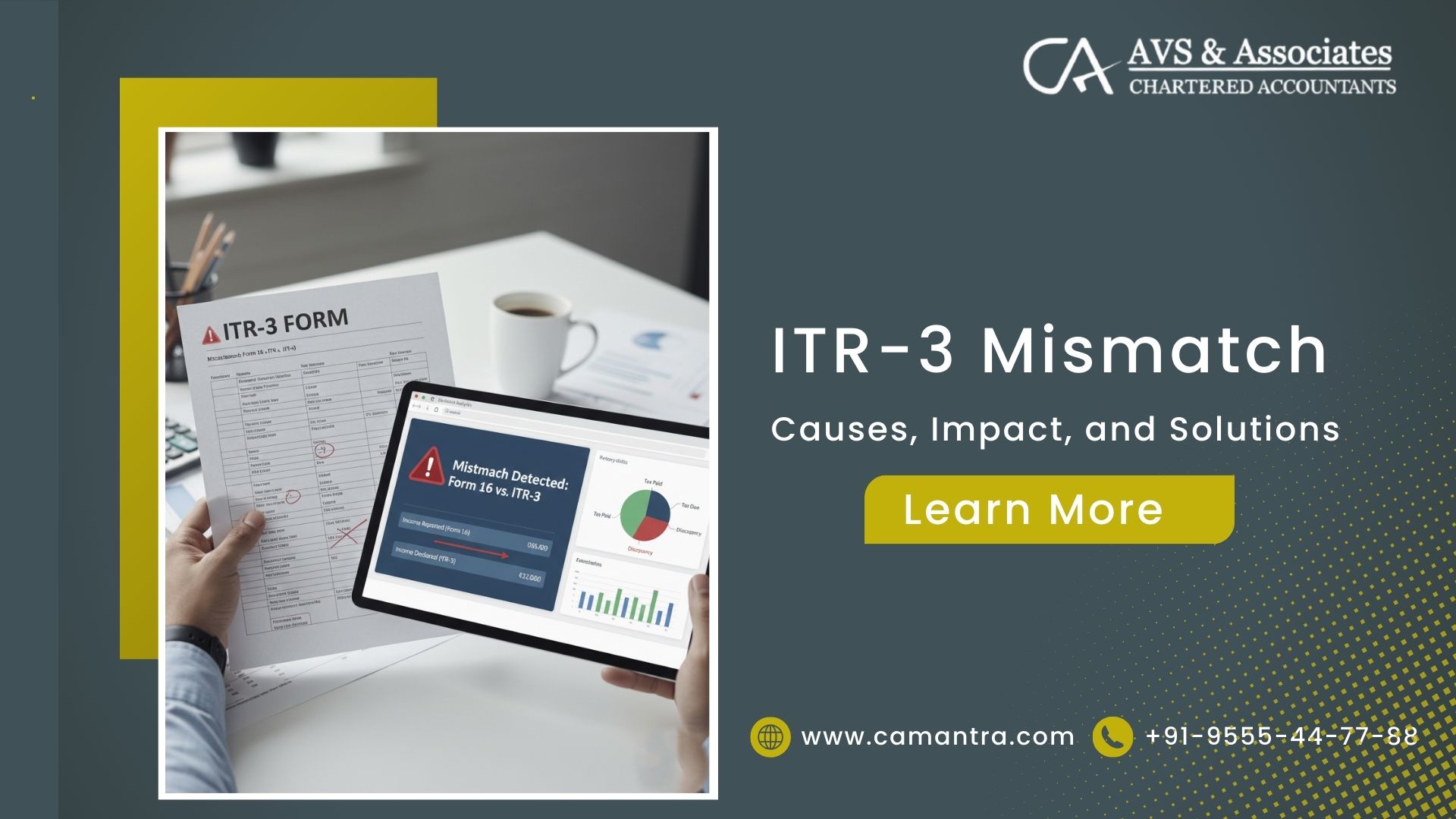
Many taxpayers filing ITR-3 for the current assessment year are encountering an unexpected issue: even though they selected the New Tax Regime under Section 115BAC, their Income Tax Return has been processed by the CPC under the Old Tax Regime. This mismatch has created confusion for individuals, professionals, and businesses who were expecting lower tax liability or higher refunds under the new structure.
If you have faced a similar problem, here’s a detailed explanation of why this happens and what steps you can take to resolve it.
Why Does the ITR-3 Regime Mismatch Occur?
The tax regime mismatch generally occurs due to technical or validation issues in the income tax e-filing system. The most common reasons include:
1. System-Level Validation Errors
During the processing stage, CPC may detect missing or inconsistent data—especially related to regime selection. Even if the correct option was chosen while filing, internal validation may override it, resulting in the return being processed under the old regime.
2. Non-Submission of Form 10-IE (for Earlier Years)
For previous assessment years, taxpayers transitioning to or from the new regime were required to file Form 10-IE. If this form was not submitted in earlier years, the system may default back to the old regime.
3. Technical Glitches or Auto-Mapping Errors
In some cases, the CPC processing system may automatically apply the default regime due to backend configuration issues, leading to mismatch errors.
How Does This Mismatch Impact Taxpayers?
A wrong tax regime applied during processing can lead to significant financial implications:
Higher Tax Demand
If the new regime was beneficial to the taxpayer, but CPC applied the old regime, it may result in increased tax liability or unexpected demand notices.
Reduced or Delayed Refund
Many taxpayers who are due for a refund under the new regime may find their refund amount reduced or their refund withheld due to discrepancies.
Unnecessary Stress and Rework
Mismatch errors require time, documentation, and additional effort to resolve—especially for self-employed individuals and professionals.
How to Fix the ITR-3 Mismatch Issue
The Income Tax Department has provided a couple of clear pathways to resolve this error. Taxpayers can take the following steps:
1. File a Rectification Request Under Section 154
Log in to the income tax e-filing portal and submit a Rectification Request.
Choose the correct option to indicate that the regime selection during original filing was accurate. Attach supporting documents if required.
2. Raise a Grievance on the E-Filing Portal
If the issue is not corrected through rectification, the next step is to submit a grievance.
Include screenshots of the ITR form showing that the new regime was selected. This helps the CPC verify the mistake quickly.
What This Means for Taxpayers and the Best Way to Proceed
The ITR-3 regime mismatch is a common issue arising from system validation challenges rather than taxpayer error. The good news is that the Income Tax Department has mechanisms in place to correct such mistakes. Filing a rectification request or raising a grievance usually resolves the matter efficiently.
If you’re unsure about the next steps or need professional help, consulting a tax expert can ensure quick resolution and prevent future discrepancies.