Selection of the correct business structure is one of the most crucial choices for entrepreneurs in India. Among the most suggested options are Limited Liability Partnership (LLP) and Private Limited Company (Pvt Ltd). Both structures provide limited liability security, but they differ significantly in terms of taxation, compliance burden, scalability, investment possibilities and operational adaptability.
Now-a-days, startups and business owners are paying more attention to compliance management, tax effectiveness and long-term growth alongside choosing a legal structure. Learning the practical differences between these two entities can assist businesses prevent future sophistications and operational challenges.
In this blog, AVS & Associates provides a comprehensive difference between LLP and Private Limited Company in an easy and informative manner.
Understanding LLP and Private Limited Company
A Limited Liability Partnership incorporates the adaptability of a classic partnership with the security of limited liability. It is commonly recommended by consultants, agencies and service-oriented businesses.
A Private Limited Company, on the other hand, is a corporate structure appropriate for startups and businesses seeking for expansion, investment and organized ownership.
Most of the entrepreneurs exploring LLP vs Pvt Ltd India mostly compare these structures according to legal work, taxation, compliance expenses and business growth potential.
Major Differences Between LLP and Private Limited Company
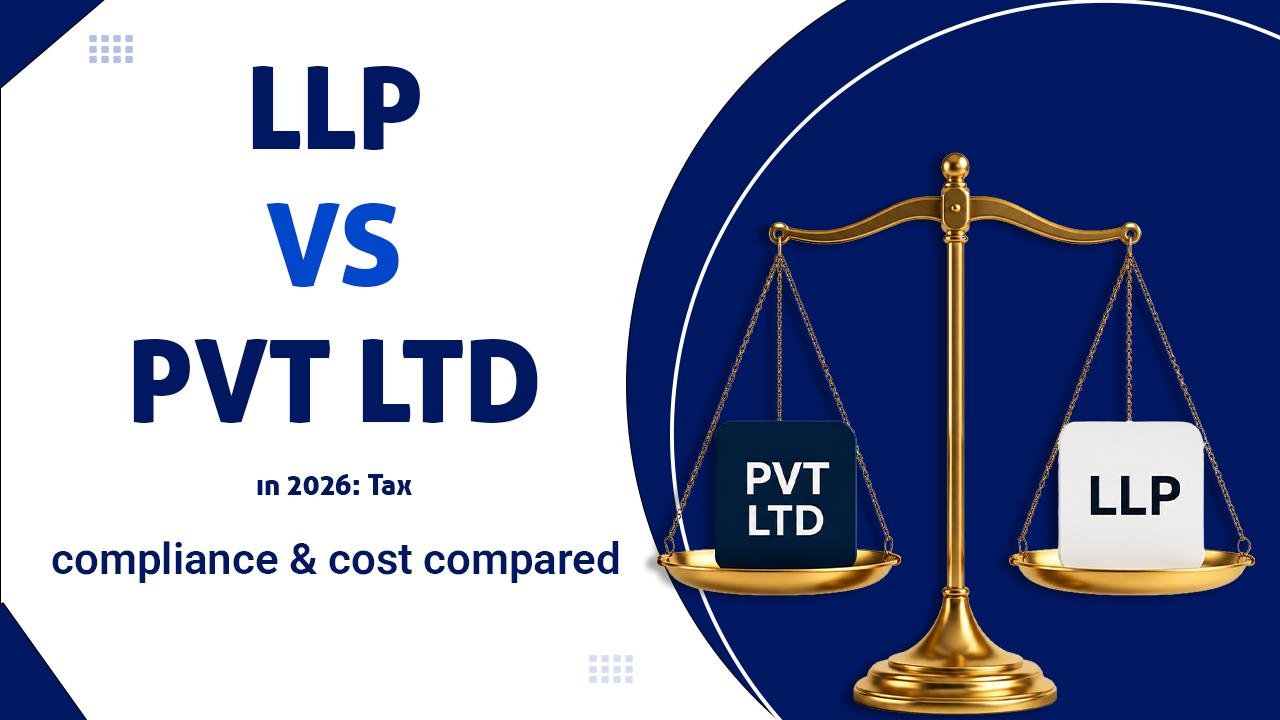
The difference between llp and pvt ltd becomes more visible when businesses compare ownership structure, compliance obligations and investment versatility.
| Comparison Basis | LLP | Private Limited Company |
| Governing Law | LLP Act, 2008 | Companies Act, 2013 |
| Ownership | Partners | Shareholders |
| Management | Managed directly by partners | Managed by directors |
| Compliance Burden | Lower | Higher |
| Audit Requirement | Based on turnover threshold | Mandatory in most cases |
| Investment Opportunities | Limited | Easier to attract investors |
| Share Transfer | Difficult | Comparatively easier |
| Annual Filings | Fewer filings | Multiple mandatory filings |
| Appropriate For | Experts and SMEs | Startups and scalable businesses |
| Legal Formalities | Flexible | More structured |
This comparison helps businesses better understand the practical aspects of llp vs private limited structures before registration.
Registration Process Comparison
The registration process for LLP and Private Limited Company is different in terms of filing and legal formalities.
LLP Registration Process
The LLP incorporation process generally includes:
- Getting Digital Signature Certificate (DSC)
- Name reservation approval
- Applying for Director Identification Number (DIN)
- Filing collaboration documents
- Drafting LLP Agreement
Private Limited Company Registration Process
Private Limited Company registration generally includes:
- DSC and DIN application
- Company name approval
- Preparation of MOA and AOA
- Company incorporation filing
- PAN and TAN generation
LLP registration is normally simple and more cost saving in comparison to Pvt Ltd Companies.
Ownership and Management Structure
Ownership structure directly influences operational versatility and decision-making authority.
LLP Structure
In LLPs:
- Partners manage the business directly
- Profit-sharing flexibility is available
- Internal operations are comparatively simple
Private Limited Company Structure
In Pvt Ltd Companies:
- Shareholders own the company
- Directors manage operations
- Ownership is represented through shares
Businesses planning long-term expansion generally prefer Private Limited Companies because of their organized corporate structure.
Investment and Scalability
Funding capability is one of the biggest deciding factors for startups.
LLP Investment Limitations
LLPs cannot issue shares to investors. Because of this:
- Venture capital funding becomes difficult
- Equity-based investments are limited
- Investor participation remains restricted
Advantages of Private Limited Company
Private Limited Companies offer better investment opportunities because:
- Shares can be issued easily
- Investors prefer corporate structures
- Fundraising becomes more convenient
Startups planning rapid growth usually choose Pvt Ltd registration for scalability and funding benefits.
Taxation Comparison in 2026
Taxation is a major consideration while selecting a business structure.
Taxation of LLP
The llp tax rate in India generally follows partnership firm taxation rules.
Important LLP Tax Features
| Tax Aspect | LLP |
| Income Tax Rate | 30% |
| Surcharge & Cess | Applicable |
| Dividend Distribution Tax | Not Applicable |
| Profit Distribution to Partners | Generally Exempt |
| Alternate Minimum Tax | Applicable in certain cases |
LLPs are often preferred for their relatively simpler taxation structure and reduced compliance burden.
Taxation of Private Limited Company
Private Limited Companies may opt for concessional corporate taxation schemes under applicable provisions.
| Tax Aspect | Private Limited Company |
| Corporate Tax Rate | 22% under Section 115BAA (subject to conditions) |
| Surcharge & Cess | Applicable |
| Dividend Taxation | Taxable in shareholders’ hands |
| Advance Tax Requirement | Mandatory |
| TDS Compliance | Required |
Even though Pvt Ltd Companies may enjoy less tax rates under some schemes, they require more accounting and reporting obligations.
Compliance Requirements in 2026
Compliance management plays a significant part in business operations and yearly expenses.
LLP Compliance Requirements
LLP compliance generally includes:
- Annual Return filing
- Statement of Accounts filing
- Income tax return filing
- GST filings if applicable
Private Limited Company Compliance Requirements
Private Limited Companies are required to maintain:
- ROC annual filings
- Board meetings
- Statutory audit
- Director KYC
- Statutory registers
- Income tax filings
The pvt ltd compliance cost is usually higher because of mandatory audits, legal documentation, and professional filing requirements.
Cost Comparison Between LLP and Pvt Ltd
The operational and yearly maintenance costs differ significantly between these structures.
| Expense Type | LLP | Private Limited Company |
| Registration Cost | Lower | Higher |
| Audit Expenses | Conditional | Mandatory |
| ROC Filing Cost | Lower | Higher |
| Professional Fees | Minimal | Comparatively High |
| Annual Compliance Cost | Affordable | Expensive |
Businesses with limited budgets mostly suggest LLP due to less operational costs.
Which Business Structure Should You Select?
The ideal structure relies completely on your business objectives and future plans.
Choose LLP If
- You want lower compliance burden
- You are starting a professional practice
- You do not require external investors
- You prefer operational flexibility
Choose Private Limited Company If
- You plan to raise funding
- You want rapid business expansion
- You are building a scalable startup
- You need stronger business credibility
Properly analyzing operational objectives can help businesses choose the correct structure for long-term success.
Significance of Professional Guidance
Selection of the incorrect business structure can lead to taxation problems, compliance difficulties and restructuring expenses later. Expert consultation assists businesses assess:
- Tax implications
- Compliance obligations
- Cost management
- Funding requirements
- Business scalability
AVS & Associates helps startups, entrepreneurs, and professionals select the most suitable legal structure based on their operational and financial goals.
Conclusion
While LLP and Private Limited Company both are advantageous in 2026, each provide a distinct set of benefits that depend on the business purpose, compliance ability and growth strategy. For less adherence and operational adaptability LLPs are mostly recommended whereas for startups seeking funding, scalability and organized growth Private Limited Companies are the most appropriate option. With professional assistance from AVS & Associates, businesses can confidently select the structure that supports long-term growth, compliance and financial effectiveness.