Big changes are coming to India’s labour landscape. Starting 21 November 2025, the government is rolling out the long-awaited four Labour Codes, which aim to simplify HR rules, protect workers better, and bring more consistency to employment practices across the country.
If you run a business, manage HR, or handle payroll, these updates will directly impact how you hire, pay, and manage your team.
Let’s break it down in simple terms.
What Exactly Are the Four Labour Codes?
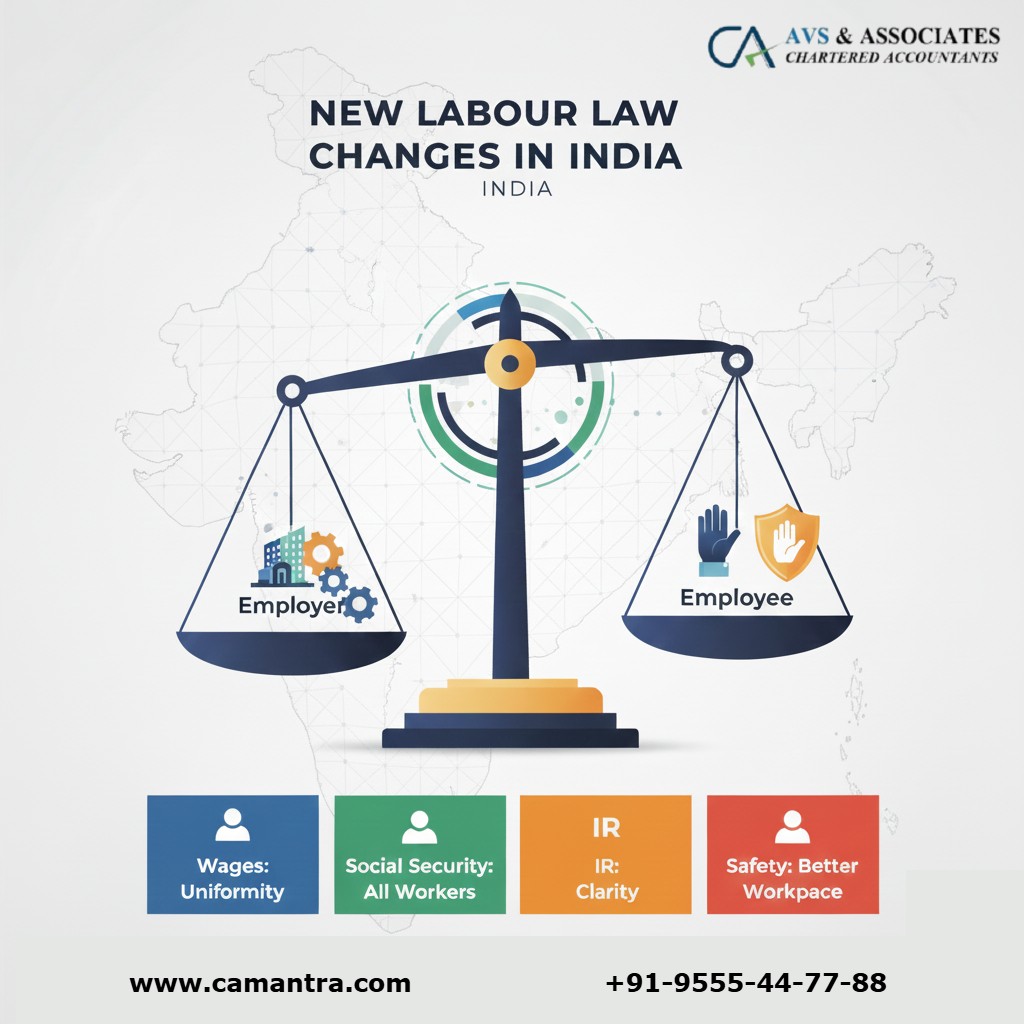
The government has combined 29 old labour laws into four easy-to-understand codes:
1. Code on Wages
This creates one uniform definition of wages, making salary calculations and statutory deductions much clearer.
2. Social Security Code
This expands coverage to include not just traditional employees but also gig and platform workers a huge move considering India’s fast-growing digital workforce.
3. Industrial Relations Code
This one deals with employment contracts, dispute resolution, and workplace rules, giving more clarity to both employers and employees.
4. Occupational Safety, Health & Working Conditions Code
This focuses on safer workplaces and standardized working conditions, especially in industries with physical labour.
Key Changes You’ll Notice as an Employer
Gratuity Eligibility Becomes Easier
Fixed-term employees will now qualify for gratuity sooner, which means companies must account for gratuity obligations earlier than before.
Appointment Letters Are Now Mandatory
Every employee must receive an official appointment letter. This simple step helps avoid misunderstandings and ensures proper documentation from day one.
Uniform Wage Formula
The new wage definition will affect PF, ESIC, gratuity, and more. Many companies may need to adjust salary structures to stay compliant.
Gig Workers Get Social Security Benefits
For the first time, people working through apps and platforms (delivery partners, freelancers, drivers, etc.) will be covered under social security schemes. Businesses that work with gig workers will need to understand their obligations under this change.
Clearer Rules for Contract and Fixed-Term Staff
The new codes make it easier to hire project-based or short-term workers without confusion around benefits or compliance.
Why This Matters for Your Business
These updates are more than just law changes they mark a major shift in HR and payroll compliance. Companies will need to revisit their employment policies, update payroll software, issue proper documentation, and stay on top of statutory contributions.
Preparing early will not only keep you compliant but also help build a more transparent, employee-friendly workplace.