
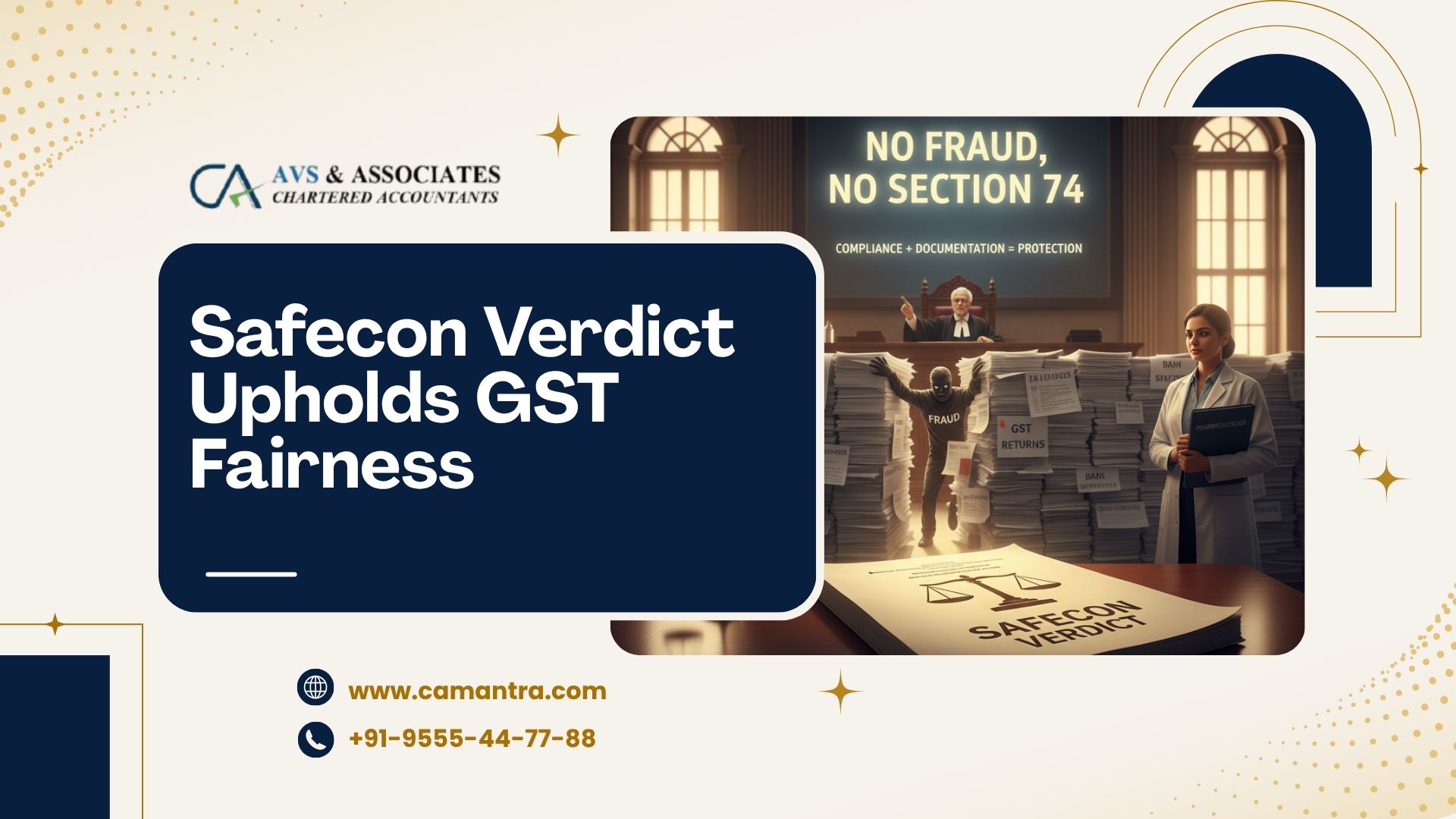
Every once in a while, a court ruling restores confidence in the system. The recent Safecon verdict does exactly that for India’s GST framework reminding both taxpayers and authorities that compliance supported by documentation is not fraud, and that Section 74 cannot be stretched beyond its intent.
When Compliance Was Mistaken for Fraud
Safecon, a pharmaceutical company, faced scrutiny despite having done everything by the book. It had tax invoices, e-way bills, transport documents, GST returns, and clear bank payments for every transaction. Yet, the tax department questioned the purchases because the supplier’s GST registration was later cancelled.
On that basis, authorities tried to invoke Section 74 of the CGST Act, which is meant for cases of fraud, suppression, or willful misstatement. But the court drew the line. It ruled that a buyer’s genuine transactions cannot suddenly be labelled fraudulent just because of a supplier’s later non-compliance.

Paperwork That Stands Up in Court
The ruling underlines something simple yet powerful documentation is protection. When businesses keep their paperwork clean and transparent, the facts speak louder than assumptions.
Invoices, e-way bills, transport records, GST returns, and verifiable payments together form a solid wall of evidence that shields compliant taxpayers from arbitrary penalties.
Section 74 Has Its Limits
The Safecon verdict makes an important distinction. Section 74 exists for proven fraud — not for every technical irregularity or post-event discovery. Using it without evidence undermines the very principle of GST justice.
The court’s message is clear: no fraud, no Section 74.
A Boost for Honest Taxpayers
For law-abiding businesses, especially in sectors like pharmaceuticals where scrutiny is high, this decision is reassuring. It shows that good faith and proper records still matter.
The verdict restores the spirit of balance protecting genuine taxpayers while keeping enforcement focused on real offenders.
A Defining Moment for GST Fairness
The Safecon verdict stands as a significant precedent in GST jurisprudence. It draws a clear boundary between deliberate fraud and genuine compliance, ensuring that taxpayers who follow due process are not unfairly penalized. For businesses, it reinforces the importance of maintaining transparent records and adhering to documentation standards. For authorities, it serves as a reminder that enforcement must be guided by evidence, not presumption.
In essence, the ruling strengthens the credibility of the GST framework protecting integrity, promoting fairness, and restoring balance to the system.