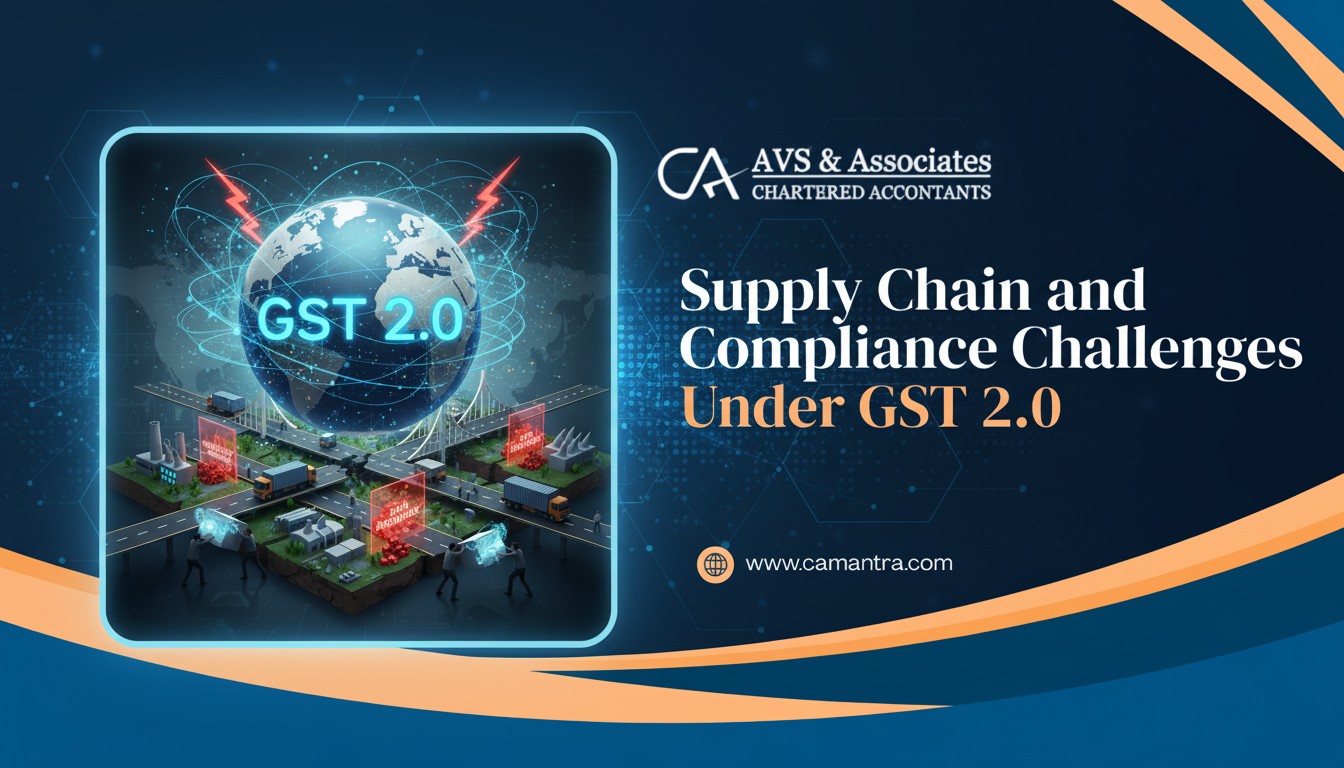
India is preparing for a major tax transition as GST 2.0 comes into effect from 22 September 2025. While the revised framework promises a simplified rate structure and improved efficiency, it also brings significant challenges for businesses, especially across supply chains, compliance systems, and financial processes.
What’s Changing in GST 2.0 Rates
| GST Category | New Rate | Key Notes |
| Merit Goods | 5% | Essential items, previously 12% or lower |
| Standard Rate | 18% | Most goods and services, moved from 12% & 28% |
| De-merit Goods | 40% | Luxury/sin items (with cess removed) |
| Nil/Exempt Items | 0% | Basic goods & services with no tax liability |
The rate simplification aims to reduce compliance burden, but the switch brings short-term disruptions across industries.
Old Stock and New Tax Slabs
Businesses holding inventory printed with old MRPs face the challenge of re-stickering or repackaging, which adds cost and effort. Goods already in transit when rates change could cause billing mismatches. Distributors and retailers may suffer losses on higher-taxed stock unless manufacturers provide relief through credit notes or reimbursements.
Money Matters: ITC, Credit Notes, and Cash Flow
Finance teams will need to carefully manage Input Tax Credit (ITC) under the new regime. Goods moving to Nil-rated categories will require ITC reversals, while inverted duty structures could lock up working capital. Issuing timely credit notes becomes crucial to ensure smooth adjustments and avoid disputes.
Don’t Forget the Tech: Updating ERP and POS Systems
Smooth compliance depends heavily on technology. Companies must update their ERP, billing, and POS systems so tax changes are reflected instantly. Product master data has to be remapped to the right slabs, and automated credit note generation will help avoid costly errors.
Sector Watch: Auto and Imports Under Pressure
The automotive industry may lose accumulated credits once the compensation cess is removed, creating financial strain. Importers will still face higher landed costs due to IGST being levied on CIF plus customs duties, even if GST rates are lower on domestic goods.
How Businesses Can Prepare Now
To minimize disruption, businesses should:
- Run a stock audit and identify impacted items.
- Plan re-labelling and packaging updates well in advance.
- Train sales, accounts, and supply chain staff on compliance changes.
- Reassess working capital needs to handle ITC shifts.
- Work closely with suppliers to streamline credit note processes.
Final Word: Early Preparation Will Pay Off
GST 2.0 is a step toward a simpler indirect tax system, but the transition won’t be easy. Companies that act early—updating systems, auditing inventory, and planning cash flow—will not only avoid compliance headaches but also be ready to reap the long-term benefits of the new framework.