When most people think about taxes, they think about:
- Filing returns.
- Meeting deadlines.
- Avoiding penalties.
In other words, they view tax planning as a compliance exercise.
Something that needs to be done because the law requires it.
But the most successful business owners, consultants, investors, and professionals tend to view taxes differently.
They see tax planning as:
A profit optimization tool.
And that mindset shift can have a significant impact on long-term wealth creation.
Let’s explore why.
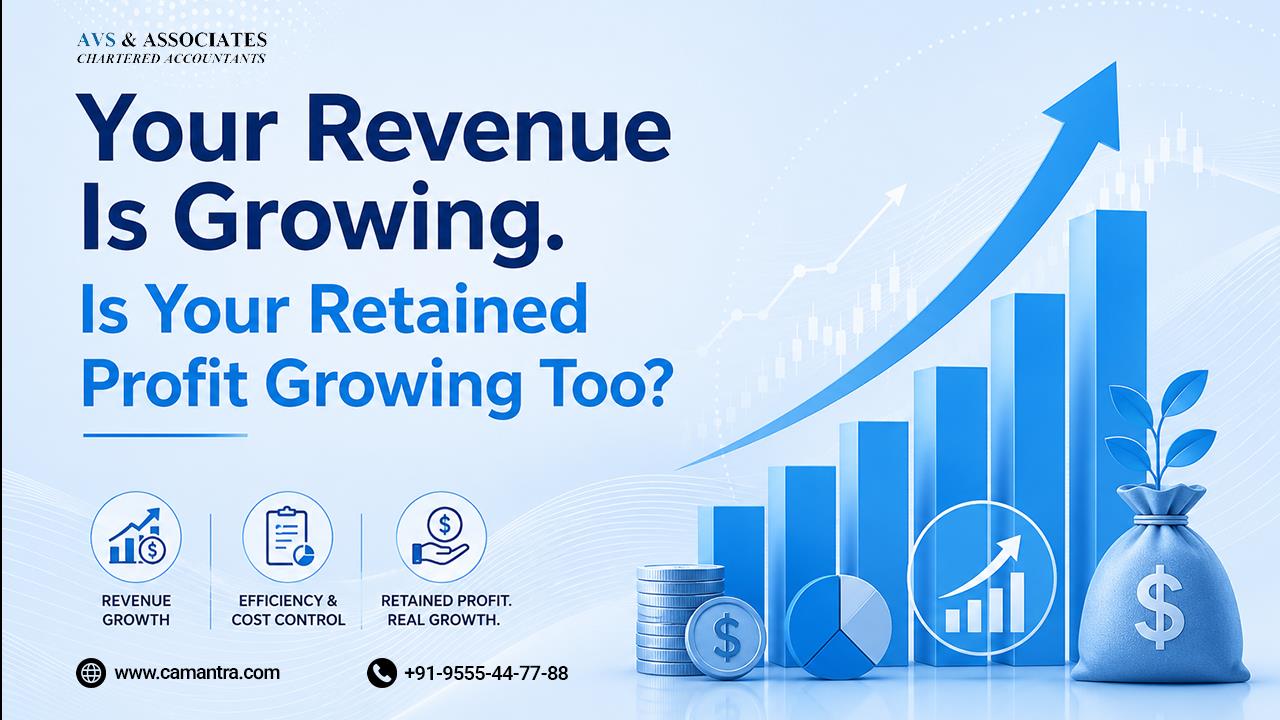
The Common Mistake: Looking at Revenue Instead of Retained Profit
Many professionals celebrate:
- Higher sales
- Bigger contracts
- Increased turnover
- Business growth
And rightly so.
But here’s a question that often gets overlooked:
How much of that revenue do you actually keep?
Because revenue is important.
Profit is important.
But what ultimately matters is:
Retained profit.
The amount left after taxes, expenses, and obligations.
That’s where tax planning becomes a strategic advantage.
Compliance Is the Minimum Requirement
Think of compliance as the baseline.
Filing returns correctly.
Paying taxes on time.
Maintaining documentation.
Meeting regulatory obligations.
These are important.
But they don’t necessarily optimize outcomes.
Compliance keeps you in the game.
Planning helps you perform better in the game.
The Difference Between Tax Filing and Tax Planning
Many people use these terms interchangeably.
They’re not the same thing.
Tax Filing
Typically focuses on:
- Reporting past transactions
- Completing returns
- Meeting deadlines
Tax Planning
Focuses on:
- Future decisions
- Business structures
- Timing strategies
- Cash flow management
- Long-term profitability
One looks backward.
The other looks forward.
Every Rupee Saved Legally Improves Profitability
Imagine two consultants earning identical revenue.
Consultant A:
- Plans throughout the year
- Structures income efficiently
- Tracks expenses properly
Consultant B:
- Thinks about taxes only at filing time
Both earn the same amount.
Yet one may retain significantly more profit.
Why?
Because optimization compounds over time.
Tax Planning Directly Impacts Cash Flow
Many business owners think tax planning is only about annual savings.
In reality, it often affects:
Monthly cash flow.
Proper planning can help:
- Reduce surprises
- Improve liquidity
- Forecast obligations accurately
- Allocate capital more effectively
And cash flow is often what determines whether businesses can scale smoothly.
Business Structure Matters More Than Most People Think
One of the biggest profit optimization opportunities involves choosing the right structure.
Examples include:
- Salary income
- Consultancy income
- Proprietorship
- LLP
- Company structure
Different structures can create different outcomes regarding:
- Taxation
- Compliance
- Cash flow
- Scalability
Many professionals continue using outdated structures simply because they never review them.
Timing Can Influence Profitability
An often-overlooked aspect of planning is timing.
Questions such as:
- When should revenue be recognized?
- When should investments be made?
- How should cash flows be managed?
Can affect overall financial outcomes.
Tax planning frequently involves timing decisions—not just tax rates.
Foreign Income Creates Additional Opportunities
Today’s professionals increasingly earn from:
- International clients
- Foreign employers
- Overseas consulting projects
- Global digital platforms
Without proper planning, many miss opportunities relating to:
- Treaty benefits
- Foreign tax credits
- GST efficiencies
- Cross-border structuring
These are not just compliance issues.
They can directly impact profitability.
Profit Optimization Is Often About Small Improvements
People sometimes expect dramatic tax-saving strategies.
In reality, wealth is often built through:
Consistent optimization.
Small improvements in:
- Tax efficiency
- Expense management
- Cash flow planning
- Business structure
Can create significant results over a decade.
The Hidden Cost of Poor Tax Planning
Most people notice taxes they pay.
They don’t notice opportunities they miss.
For example:
- Unclaimed deductions
- Inefficient structures
- Missed exemptions
- Incorrect income classification
- Poor advance tax management
These aren’t always visible losses.
But they can quietly reduce profitability year after year.
Why Growing Businesses Need Strategic Planning
As revenue increases, complexity usually increases too.
Businesses may begin dealing with:
- Multiple income streams
- Foreign clients
- Employees
- Contractors
- Investments
- Expansion plans
At this stage, reactive tax management becomes risky.
Strategic planning becomes increasingly valuable.
The Most Successful Founders Think Beyond Tax Savings
They don’t ask:
“How can I reduce my taxes this year?”
They ask:
“How can I build a more efficient business?”
That broader perspective often leads to better financial outcomes.
Because taxes are connected to:
- Cash flow
- Growth
- Investment decisions
- Business strategy
Not just compliance.
A Practical Profit Optimization Checklist
Ask yourself:
- Is my current business structure still efficient?
- Am I reviewing tax implications before major decisions?
- Are all legitimate deductions being tracked?
- Is cash flow being planned proactively?
- Have cross-border opportunities been evaluated properly?
- Do I review strategy throughout the year—not just during filing season?
If not, there may be opportunities to improve profitability.
The Bigger Lesson
Tax planning should not be viewed as a year-end task.
Or a compliance burden.
Or an administrative necessity.
It should be viewed as:
Part of financial strategy.
The same way businesses think about:
- Sales
- Marketing
- Operations
- Investments
They should also think about tax efficiency.
Because all of these factors influence profitability.
Final Thought
Every business owner wants higher profits.
Every professional wants greater financial freedom.
Every entrepreneur wants to retain more of what they earn.
The reality is:
Revenue growth alone doesn’t guarantee any of those outcomes.
Profit optimization requires intentional planning.
And tax planning is one of the most powerful—but often overlooked—tools available.
Not because it helps you avoid taxes.
But because it helps you make smarter financial decisions.
And smarter financial decisions tend to create stronger businesses, better cash flow, and greater long-term wealth.
That’s why tax planning is not just compliance.
It’s a profit optimization strategy.