Filing your Income Tax Return (ITR) at the last moment can cause stress, missed deductions, technical issues and extra fines. Each year, most of the taxpayers wait until July to submit their returns, only to understand that a delay can result in extra charges under the Income Tax Act. Learning the rules associated with delayed filing can assist taxpayers prevent unwanted expenses and compliance problems.
In this guide, AVS & Associates explains the fines under section 234f, crucial deadlines, applicable ITR forms and practical tips to complete your return timely in 2026.
Why Filing ITR on Time Matters
On-time ITR filing isn’t just a legal responsibility but also provides various financial and procedural advantages.
Advantages of Filing Prior to the Deadline
- Prevent late filing fines and interest
- Quicker processing of refunds
- Easy approval for loans and visas
- Carry forward of capital losses
- Reduced chances of receiving tax notices
- Better financial documentation for future use
Taxpayers who file late mostly face portal slowdowns during the last days of July, which may increase the chances of mistakes or incomplete submissions.
Understanding the Last Date for ITR Filing in 2026
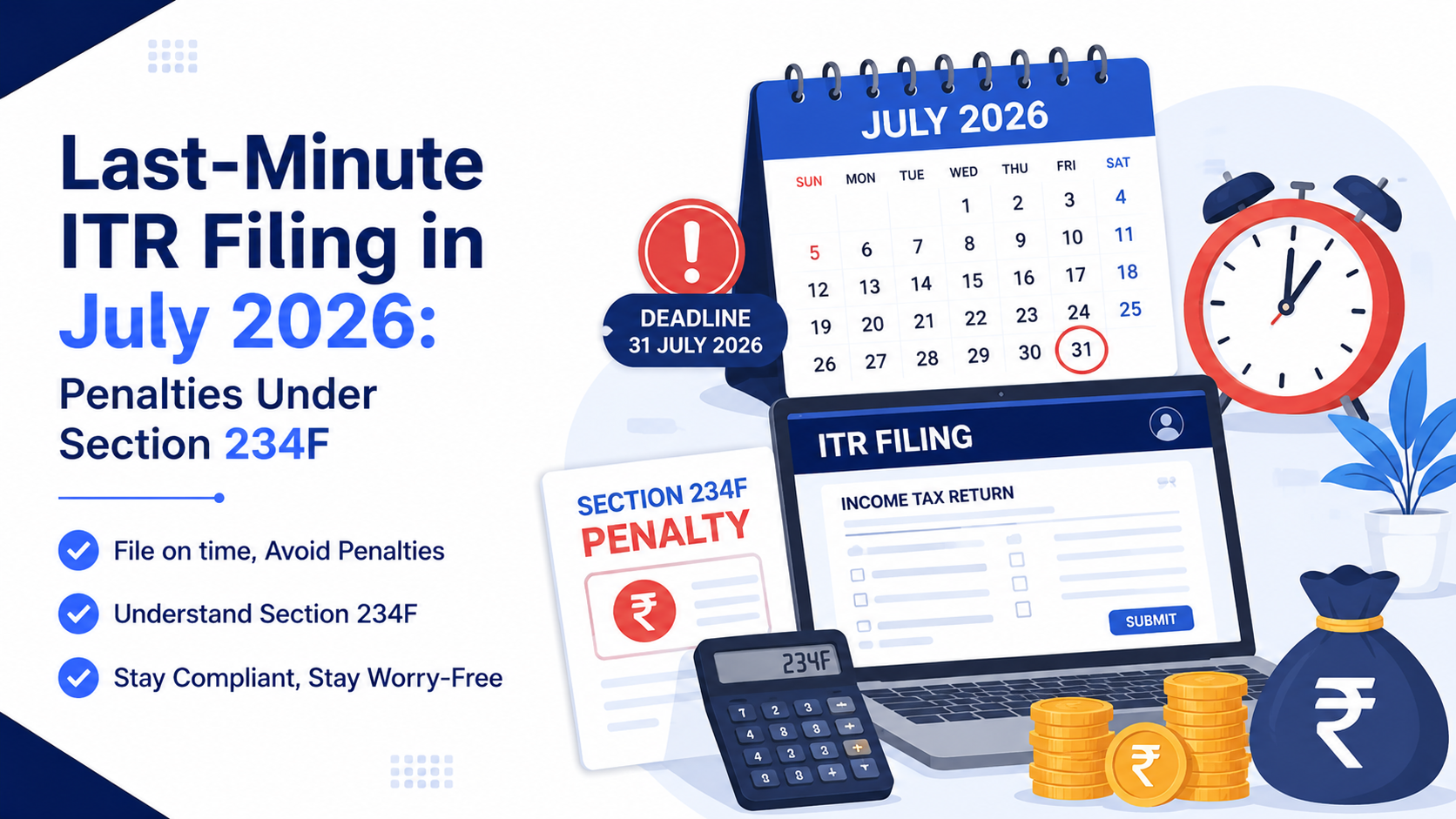
One of the most common queries taxpayers raise is what is the last date to file itr. For the majority of salaried people and taxpayers not wanting an audit, the due date is generally 31st July of the evaluation year unless extended by the government.
Similarly, most of the taxpayers search online asking when is the last date to file itr because schedules may change according to the type of taxpayer.
General ITR Filing Deadlines
| Taxpayer Category | Expected Due Date |
| Salaried Individuals | 31st July 2026 |
| Freelancers & Professionals (No Audit) | 31st July 2026 |
| Businesses Requiring Audit | 31st October 2026 |
| Transfer Pricing Cases | 30th November 2026 |
Taxpayers should periodically check updates issued by the Income Tax Department because extensions may occasionally be announced.
Fine Under Section 234F Explained
The Income Tax Act introduced fines for late return filing to encourage on-time adherence. The provision particularly dealing with this fine is itr late filing penalty under Section 234F.
Penalty Structure Under Section 234F
| Total Income | Penalty Amount |
| Up to Rs. 5 lakh | Rs. 1,000 |
| Above Rs. 5 lakh | Up to Rs. 5,000 |
If taxpayers fail to submit returns before the due date, the penalty becomes applicable while filing a belated return.
Important Points About Section 234F
- Applicable to individuals filing after the due date
- Penalty amount depends on taxable income
- Levied in addition to interest under Sections 234A, 234B, and 234C
- Even taxpayers expecting refunds should file timely
The rules relating to ITR last date penalty 2026 are expected to remain strict as the government continues focusing on higher tax compliance.
Who Is Most Affected by Late ITR Filing?
Certain taxpayers face greater consequences due to delayed filing.
Salaried Employees
- Delay in tax refunds
- Difficulty in financial documentation
- Possible notices for mismatched TDS
Freelancers and Consultants
- Complications in GST reconciliation
- Interest liability on unpaid taxes
- Loss of professional credibility during financial checks
Business Owners
- Additional compliance burden
- Possible audit complications
- Greater examination from tax authorities
Typical Reasons for Last-Minute Filing
The majority of taxpayers delay the filing due to preventable reasons.
Common Reasons Behind Delay
- Missing investment proofs
- Waiting for Form 16
- Confusion regarding deductions
- Lack of awareness about tax forms
- Fear of calculation mistakes
- Portal traffic issues near the deadline
These last minute issues can be avoided with proper planning and early preparation.
Which ITR Form Should You File?
Choosing the correct return form is essential because filing the wrong form may lead to defective return notices. Many taxpayers search for which itr form to file while preparing their returns.
Popular ITR Forms for Individuals
| ITR Form | Applicable For |
| ITR-1 | Salaried individuals with income up to prescribed limit |
| ITR-2 | Individuals with capital gains or multiple house properties |
| ITR-3 | Business owners and professionals |
| ITR-4 | Presumptive income taxpayers |
How to Select the Correct Form
- Check your income source
- Review capital gains transactions
- Verify foreign income or assets
- Understand business or professional income classification
Consulting tax professionals can help avoid errors while selecting forms.
Consequences Beyond the Penalty
Late filing affects more than just fines.
Additional Consequences of Late Filing
- Interest on unpaid taxes
- Delay in refunds
- Loss carry-forward restrictions
- Difficulty in obtaining loans
- Higher risk of tax notices
- Reduced financial credibility
Taxpayers with capital losses especially suffer because losses generally cannot be carried forward if the return is filed after the due date.
Documents Required Before Filing
Organizing documents early can make the filing process easy.
Crucial Documents Checklist
- PAN card
- Aadhaar card
- Form 16
- Bank statements
- Investment proofs
- Home loan certificates
- Capital gains statements
- AIS and TIS reports
- GST details for freelancers or businesses
By keeping these documents ready filing errors can be decreased and submission can be fastened up.
Tips to Prevent Last-Minute ITR Filing Stress
Filing taxes early decreases pressure and improves accuracy.
Functional Filing Tips
- Start collecting documents in advance
- Verify Form 26AS before filing
- Match TDS entries carefully
- Calculate advance tax correctly
- Avoid filing during peak portal hours
- Consult experts for complex income cases
- Maintain virtual copies of all records
Expert guidance can greatly reduce filing errors and compliance risks.
How Professional Assistance Helps
Tax laws continue changing frequently, making professional support increasingly valuable.
Benefits of Hiring Tax Experts
- Accurate form selection
- Proper deduction claims
- Timely filing support
- Reduced notice risk
- Better tax planning
- Assistance with revised returns
AVS & Associates assists individuals, freelancers, NRIs and businesses manage tax filings effectively alongside ensuring adherence with current rules.
Conclusion
ITR filing till the last days of July 2026 may result in fines, interest, delay in refunds and compliance challenges. By knowing the deadline, selection of the correct ITR form and preparing documents ahead of time, taxpayers can prevent unwanted stress and financial damages. With expert advice from AVS & Associates, taxpayers can complete their returns precisely and timely beside decreasing the risks related with late filing under Section 234F.