Getting a notice from income tax can feel stressful, particularly when you don’t know the reason behind it or the processes you should follow thereafter. Nevertheless, not each notice from the Income Tax Department means you have done something illegal. In the majority of cases, notices are periodic communications asking for clarification, correction or extra information.
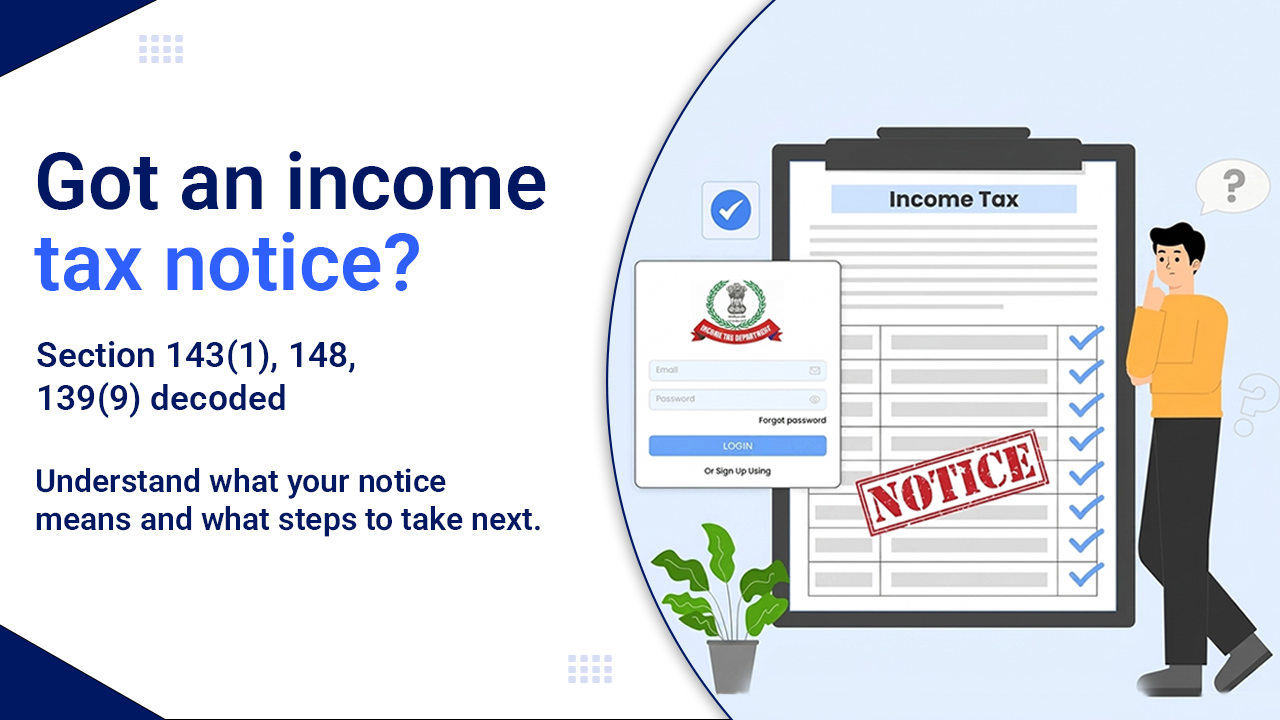
AVS & Associates assists taxpayers, salaried people, freelancers, business owners and NRIs learn about tax notices and respond correctly within the given schedule. In this guide, we will understand about the most common notices under the Income Tax Act — income tax notice 143(1), Section 148 and Section 139(9).
Understanding Why Income Tax Notices Are Issued
The Income Tax Department may send notices for several reasons, such as:
- Mismatch in income details
- Incorrect tax calculations
- Missing documents or disclosures
- Defective return filing
- Unreported bank transactions or investments
- Suspicion of escaped income
- Errors in deductions or exemptions claimed
Careful reading of the notice is important rather than overlooking it. Most of the notices can be resolved seamlessly through expert handling within the given timeline.
What is Section 143(1)?
The notice under section 143(1) is one of the most commonly issued communications by the Income Tax Department. It is usually generated after the department processes your Income Tax Return (ITR).
This notice is often called an “Intimation Notice.”
What Does It Mean?
The department compares:
- Income declared in your ITR
- TDS details
- Tax payments
- Information available in Form 26AS and AIS
If there is any mismatch, adjustment, or correction, the department sends an intimation under Section 143(1).
Types of Outcomes Under Section 143(1)
After processing your return, the department may issue one of the following results:
1. No Demand and No Refund
- Your return has been accepted successfully.
- No further action is required.
2. Refund Determined
- The department confirms that excess tax has been paid.
- Refunds will be credited to your bank account.
3. Demand Payable
- Additional tax liability has been identified.
- You may need to pay outstanding tax with interest.
Common Reasons Behind Section 143(1) Notices
Some common triggers include:
- Mismatch in TDS
- Wrong deduction claims
- Incorrect income reporting
- Failure to include interest income
- Differences between AIS and filed return
- Mathematical mistakes
If you get an intimation, review the details carefully prior to sending any response.
Understanding the Section 148 Notice
A section 148 notice is more serious in comparison to a Section 143(1) intimation. It is issued when the Income Tax Department believes that certain income hasn’t been evaluated.
This notice is issued under re-evaluation processes.
Why is a Section 148 Notice Issued?
The department may issue this notice in situations such as:
- Undisclosed bank transactions
- Unreported capital gains
- Hidden foreign income
- Large cash deposits
- Property transactions not disclosed in ITR
- Information received from other agencies
The taxpayer is asked to provide clarification or file a revised response.
Important Things to Check in a Section 148 Notice
When you receive a notice, verify:
- Assessment year mentioned
- Reason for reopening assessment
- Deadline for response
- Supporting information or allegations
- PAN and personal details
Overlooking this notice can cause fines, reassessment and further scrutiny.
How to Respond to Section 148 Notices
Following are some crucial steps:
- Read the notice carefully
- Download the notice from the income tax portal
- Collect supporting documents
- Review old ITR filings
- Submit a response within the given timeline
- Consult tax experts if needed
Expert advice is highly suggested as re-evaluation cases involve comprehensive compliance.
What is Section 139(9)?
The notice under section 139(9) is mainly recognized as an incorrect return notice. This notice means the Income Tax Department has discovered errors or missing information in your filed return.
The taxpayer is given a chance to correct the mistakes within a given timeline.
Common Reasons for Defective Return Notices
A defective return notice may be issued for reasons such as:
- Incorrect ITR form selection
- Missing profit and loss statement
- Incomplete balance sheet details
- Tax payment mismatch
- Missing audit information
- Non-disclosure of income
- Incorrect computation details
Even small filing mistakes can trigger this notice.
What Happens in Case You Overlook Section 139(9)?
If the errors are not corrected within the provided timeline:
- Your ITR may become invalid
- The return may be treated as not filed
- Penalties and interest may apply
- Refund claims can get delayed
- Loss carry-forward benefits may be denied
This is why on-time action is important.
What To Do If You Receive an Income Tax Notice
In case you’re thinking about what to do if i get income tax notice, follow these steps carefully:
Step 1 – Do Not Panic
- The majority of notices are informational or corrective.
- Calmly go through the notice.
Step 2 – Validate Genuineness
Check:
- DIN number
- PAN details
- Assessment year
- Official income tax portal communication
Step 3 – Understand the Objective
Identify whether the notice relates to:
- Processing adjustment
- Defective return
- Reassessment
- Demand notice
- Verification request
Each notice requires different responses.
Step 4 – Gather Essential Documents
Keep these documents prepared:
- Filed ITR copy
- Form 16
- AIS and Form 26AS
- Investment proofs
- Bank statements
- Tax payment challans
Step 5 – Respond Within the Given Timeline
Late responses can develop extra complications. Always submit replies before the due date mentioned in the notice.
How To Reply to Income Tax Notice Correctly
Most of the taxpayers look online for how to reply income tax notices as the response process can appear technical. Following are some practical tips:
Use the Income Tax Portal
Most notices can be replied to online through the income tax e-filing portal.
General Process
- Log in to the portal
- Open “Pending Actions”
- Select “e-Proceedings”
- View notice details
- Upload supporting documents
- Submit response
Keep Your Reply Clear and Accurate
While replying:
- Use factual information only
- Attach supporting proofs
- Avoid incomplete explanations
- Double-check calculations
Wrong responses may lead to further scrutiny.
Look for Expert Assistance When Required
Professional tax experts can help:
- Draft accurate replies
- Handle reassessment notices
- Correct defective returns
- Reduce compliance risks
- Manage demand disputes
This is particularly crucial in complex or high-value cases.
Common Mistakes Taxpayers Should Prevent
Avoid these common mistakes when dealing with notices:
- Ignoring notices completely
- Missing deadlines
- Filing incomplete responses
- Uploading incorrect documents
- Using wrong ITR forms
- Hiding income details
- Not reconciling AIS and Form 26AS
Timely compliance reduces the risk of penalties and litigation.
How AVS & Associates Can Help
AVS & Associates assists individuals and businesses with:
- Income tax notice handling
- ITR corrections and revisions
- Section 148 reassessment support
- Defective return rectification
- Tax demand resolution
- Documentation and compliance assistance
Expert handling guarantees proper representation and decreases unwanted stress.
Conclusion
Getting a notice from income tax doesn’t automatically mean legal problems, but it must never be overlooked. Return communication, knowing the purpose of the notice and sending correct response is crucial in case of Section 143(1) intimation, Section 148 reassessment notice or Section 139(9) defective. Through proper documentation, on-time action and professional support from AVS & Associates, taxpayers can resolve notices effectively and stay adhered with income tax rules.